
Hard Candy Guide: Clarity, Cracks, Sticking, Portions, and Safety
Hard candy is cooked to a low-moisture glassy texture, but humidity, impact, heat, fillings, and packaging can change it. A piece may become sticky, crack into sharp shards, fuse with neighbours, or pose a choking risk. Choosing and storing hard candy well means looking at size, ingredients, condition, and the person who will eat it.
Choose the Style
Hard drops, lollipops, filled candies, pressed mints, brittle sheets, and clear boiled sweets behave differently. Some are meant to dissolve slowly; others have liquid or chewy centres. Ask whether a product is sugar-free, spicy, sour, medicated, caffeinated, or intended for adults. Candy-like appearance does not prove that an item is ordinary food.

Timothy Adams Chocolates / timothy adams chocolates
Palo AltoSanta Clara CountyCalifornia
539 Bryant St, Palo Alto, CA 94301, USA
Read Ingredients and Allergens
Check every package for allergens, colours, flavours, sweeteners, acids, and filling ingredients. Shared equipment may matter. Sugar-free candies can have serving guidance and digestive effects that vary by ingredient. Do not give a product to a pet; sweeteners and other components safe for people may be dangerous to animals. Preserve the wrapper for reference.

Droolin Moose / droolin moose
St. Louis ParkHennepin CountyMinnesota
5007 Excelsior Blvd, St Louis Park, MN 55416, USA
Match Size to the Person
Hard candy can block the airway, especially for very young children and people with chewing or swallowing difficulty. The FDA’s food-safety guidance for parents identifies hard candy as a choking hazard to remove from very young children. Follow age labeling and medical guidance; cutting it into irregular hard pieces may create new hazards.
Inspect the Surface
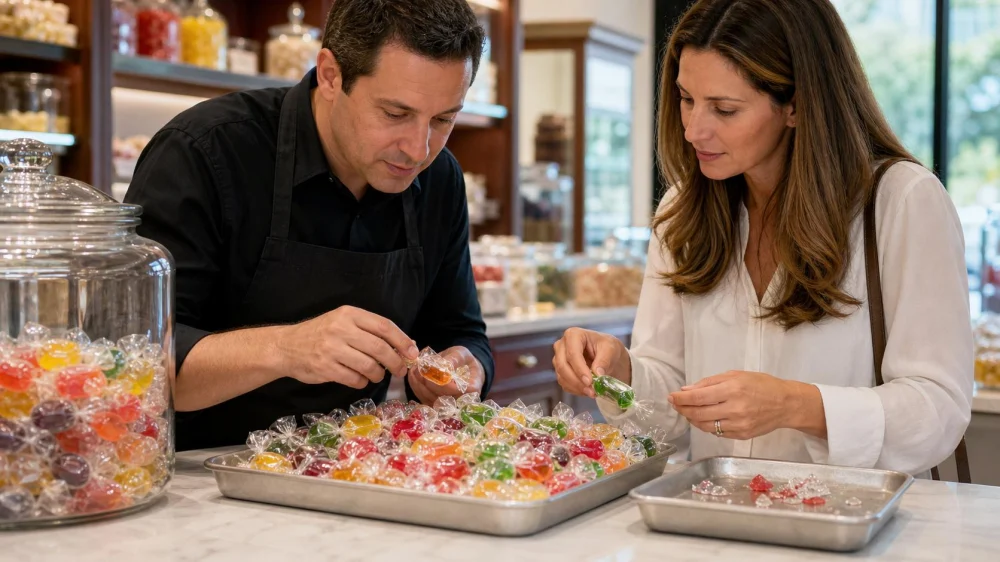
Before eating, look through the wrapper for dirt, insects, holes, melted areas, unexpected cloudiness, exposed filling, and broken edges. A clear candy may contain normal bubbles, but a changed appearance should be compared with product information. Do not accept unwrapped candy from an unknown source or return a handled piece to a shared bowl.
Understand Sticking
Humidity can make sugar absorb moisture, creating a tacky surface and causing pieces to fuse. Heat can distort shapes and compromise wrappers. A sticky product is messy and may pull at dental work. Do not separate a solid block with a knife while holding it. Contact the maker when a sealed product arrives melted or unusually wet.
Handle Cracks and Shards
A cracked candy can have sharp points that cut the mouth or wrapper. Discard pieces with dangerous edges rather than biting down to smooth them. Sweep broken candy from floors where children and pets cannot find it, and inspect the package for tiny fragments. Do not strike a hard candy to divide it unless a recipe provides a controlled method.
Plan Portions
Read serving size and nutrition information and choose a small number before starting. Individually wrapped pieces can make portions easier to track. Candy should not replace meals or required medication. People managing diabetes, dental disease, or another health condition should follow individual advice from their healthcare professional instead of relying on “sugar-free” as a universal solution.
Eat in a Safe Setting
Sit or walk calmly and keep one piece at a time in the mouth. Do not eat hard candy while running, playing sports, sleeping, driving, or lying down. Avoid talking or laughing with the candy positioned near the throat. Supervise according to age and ability. Choking requires immediate emergency response and appropriate first aid.
Store Individually and Dry
Keep hard candy in intact wrappers or a clean airtight food container in a cool, dry place away from heat, sunlight, pests, strong odours, and household chemicals. Label bulk candy with ingredients and date. Do not mix old and new batches without cleaning and drying the container, and do not leave candy loose in pockets with coins or medication.
Discard Questionable Candy
Discard candy with torn or missing wrappers, contamination, pests, mould-like growth, leaking filling, sharp breakage, chemical odour, recall match, or unknown source. For a complaint, save an unopened example, packaging, lot code, receipt, and photos when safe. Do not encourage someone else to taste the piece to verify the problem.
For a shared dish, keep only individually wrapped candies and retain the original outer package with allergen and lot information. Place the dish away from toddlers, pets, heat, and direct sun. Remove empty wrappers and damaged pieces regularly. Do not mix cough drops, supplements, cannabis products, nicotine products, or medicines into a candy container; similar shapes can cause dangerous identification errors.
When buying bulk candy, ask how it was handled, dated, and protected from allergen contact. Transfer it only with clean dry utensils and record the purchase date. If individual ingredients or origin cannot be confirmed for a guest’s needs, offer a sealed labeled alternative.
Hard candy quality and safety depend on condition and context. Read the label, match size to the eater, inspect wrappers and cracks, control portions, avoid active or reclining eating, and store pieces dry and separate. When the candy is damaged or its history is uncertain, discard it.



 ChocoLotto0.0 (0 reviews)
 Donnelly Chocolates4.0 (294 reviews)
 Zak's Chocolate (Preorder for Pickup)4.0 (92 reviews)
 Chocolate by Sparrow5.0 (5 reviews)
 M&M'S At Disney Springs4.0 (6601 reviews)
 Northwoods Candy Emporium4.0 (278 reviews)
 Top Candy Shops for Tourists in New York – Best Sweets and Treats
 Best Candy Shops in New York - A Sweet Adventure Through the City
 How to Make Candy-Themed Crafts for Christmas Gift Giving
 How to Make Chocolate-Covered Strawberries for Kids: A Fun and Easy Recipe
 How to Make Easy Gummy Worms at Home | Homemade Candy Recipes
 How to Host a Candy-Themed Movie Night | Fun and Sweet Ideas