
Chocolate Bloom: Why Candy Turns White and What to Do
On this page
Quick answer
White or gray film on chocolate is often bloom: cocoa butter or dissolved sugar has moved and recrystallized on the surface. Bloom changes appearance, snap and texture but is not the same as mould. Check the date, wrapper, odour and storage history. Discard chocolate with fuzzy growth, pests, rancid or unusual smell, wet contamination, damaged packaging or uncertain handling. Bloomed chocolate can often be used for baking or melting.

The Ganachery / the ganachery
Lake Buena VistaOrange CountyFlorida
1486 East Buena Vista Drive, Disney Springs, Town Center, Lake Buena Vista, FL 32830, USA
What chocolate bloom is
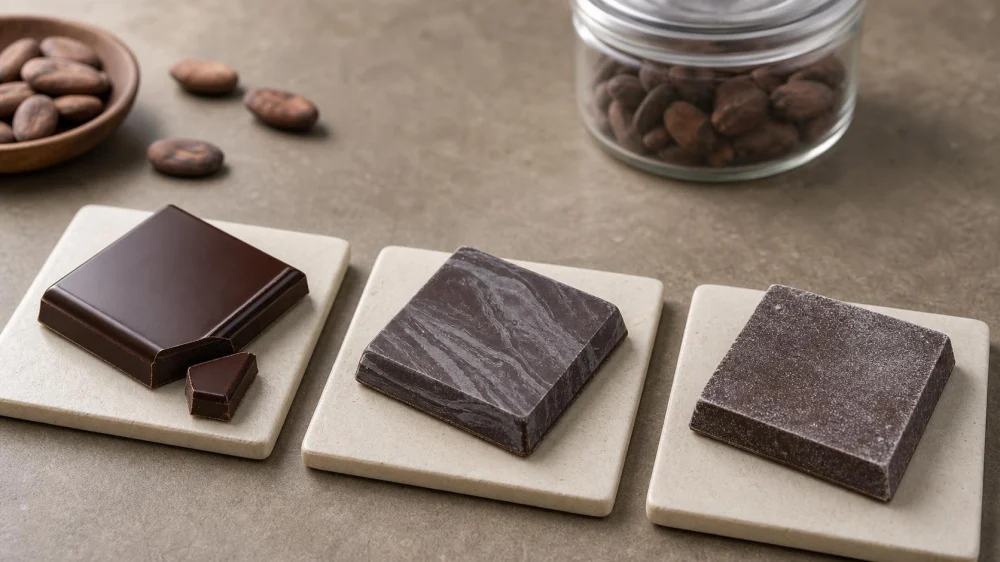
Chocolate bloom is a visible pale coating, streak or speckling caused by changes in cocoa butter crystals or surface sugar. It commonly follows temperature swings, poor tempering, moisture exposure or storage that is too warm.
Bloom may look alarming because dark chocolate loses its glossy colour, but it is a physical quality defect rather than a diagnosis of microbial spoilage. Filled candies require additional evaluation because centres can have separate shelf-life and safety limits.

Lee Sims Chocolates / lee sims chocolates
422 Manor Rd, Staten Island, NY 10314, USA
Fat bloom versus sugar bloom
Fat bloom
- Often appears as smooth gray streaks, marbling or a hazy film.
- May feel slightly greasy or melt when rubbed.
- Can follow warm storage, temperature cycling or unstable cocoa butter crystals.
- Fats from nuts or fillings may migrate into the chocolate coating.
Sugar bloom
- Often feels dry, rough or dusty with fine pale crystals.
- Forms when moisture dissolves surface sugar and then evaporates.
- Can follow refrigeration without protective wrapping, condensation or humid storage.
Appearance can overlap. The practical response is usually the same: assess safety and quality, then improve moisture and temperature control.
Check before eating or using it
- Read the product date and storage directions.
- Inspect the unopened wrapper for holes, broken seals, swelling, moisture or pests.
- Note whether the pale area is smooth or crystalline versus fuzzy or coloured growth.
- Smell for rancid oil, fermentation, mustiness or a chemical odour.
- Check fillings for leakage, drying, separation or unexpected texture.
- Consider whether the chocolate was left in a hot car, exposed to water or stored with strong odours.
- When uncertain, discard it rather than taste-testing for safety.
Likely quality issue: intact package, normal odour, known temperature change and smooth or crystalline bloom. Do not use: visible mould-like growth, insects, water damage, rancidity or unknown bulk-bin history.
How to use bloomed chocolate
- Baking: chips or chopped bars can often be used where final gloss is unimportant.
- Ganache or sauce: careful melting can restore a smooth mixture if ingredients remain sound.
- Tempering: skilled tempering can restore shine and snap to plain compatible chocolate.
- Decorations: avoid bloomed pieces when a glossy unmelted finish matters.
- Filled candy: follow the filling's shelf-life and storage requirements rather than judging the shell alone.
Melt chocolate gently and keep water out. Chocolate that has seized from moisture may sometimes suit a sauce after recipe adjustment, but it is not automatically suitable for tempering.
Prevent bloom at home
- Store chocolate in a cool, dry, dark place with stable temperature.
- Keep it tightly wrapped away from strong odours.
- Avoid repeated movement between refrigerator and room temperature.
- If refrigeration is necessary in a hot climate, seal it against moisture and let the closed package warm before opening.
- Keep homemade tempered candy within the working and storage guidance for the recipe.
- Separate nut- or fat-rich fillings when migration may affect a shell over time.
What to ask at a candy store
- When was the product made or received?
- Does it contain a perishable or high-moisture filling?
- How should it be transported and stored?
- Is the visible finish expected for that handmade product?
- What is the return or quality policy for sealed candy?
- Can ingredient and allergen information be provided?
Handmade chocolate may vary visually without being defective, but a shop should explain storage and shelf-life. Directory listings do not verify current inventory or handling.
Food safety and allergy notes
This guide provides general chocolate-quality and storage information. It cannot verify a product from a photograph. Follow the manufacturer's label and local public-health advice for recalls or temperature-abused foods.
Bloom does not remove allergens. Keep original packaging for ingredient and cross-contact information, and do not serve unidentified candy to someone with a food allergy.
Frequently asked questions
Is white chocolate bloom mould?
Usually not, but appearance alone is not conclusive. Smooth or crystalline bloom differs from fuzzy growth and spoilage odour.
Can bloomed chocolate taste different?
Yes. It may feel grainy, waxy or less crisp even when still usable.
Does refrigeration cause bloom?
Cold storage can contribute when condensation forms or chocolate cycles between temperatures. Sealed packaging and gradual warming reduce risk.
Can I fix bloom in the microwave?
Melting may make it usable in a recipe, but restoring a glossy tempered finish requires controlled temperature and technique. Overheating can burn chocolate.
Why do filled chocolates bloom faster?
Fats or moisture from fillings can migrate into the shell, and handmade products may have shorter shelf lives.
Next steps
Inspect the wrapper, date, smell and texture, then separate likely bloom from signs of spoilage or contamination. Use sound bloomed chocolate in melted recipes when appearance is unimportant, and store future candy with stable cool temperature and moisture protection.





 Gertrude Hawk Chocolates4.0 (145 reviews)
 Fannie May4.0 (141 reviews)
 Ms Jana's Candy5.0 (72 reviews)
 Freese's Candy Shoppe & Heavenly Roasted Nuts | Historic Third Ward, Milwaukee4.0 (18 reviews)
 Rocky Mountain Chocolate Factory3.0 (78 reviews)
 Lolli & Pops4.0 (77 reviews)
 Top Candy Shops for Tourists in New York – Best Sweets and Treats
 Best Candy Shops in New York - A Sweet Adventure Through the City
 How to Make Candy-Themed Crafts for Christmas Gift Giving
 How to Make Chocolate-Covered Strawberries for Kids: A Fun and Easy Recipe
 How to Make Easy Gummy Worms at Home | Homemade Candy Recipes
 How to Host a Candy-Themed Movie Night | Fun and Sweet Ideas