
Candy Wrapper Recycling: Check Local Rules First
Table of contents
Quick answer
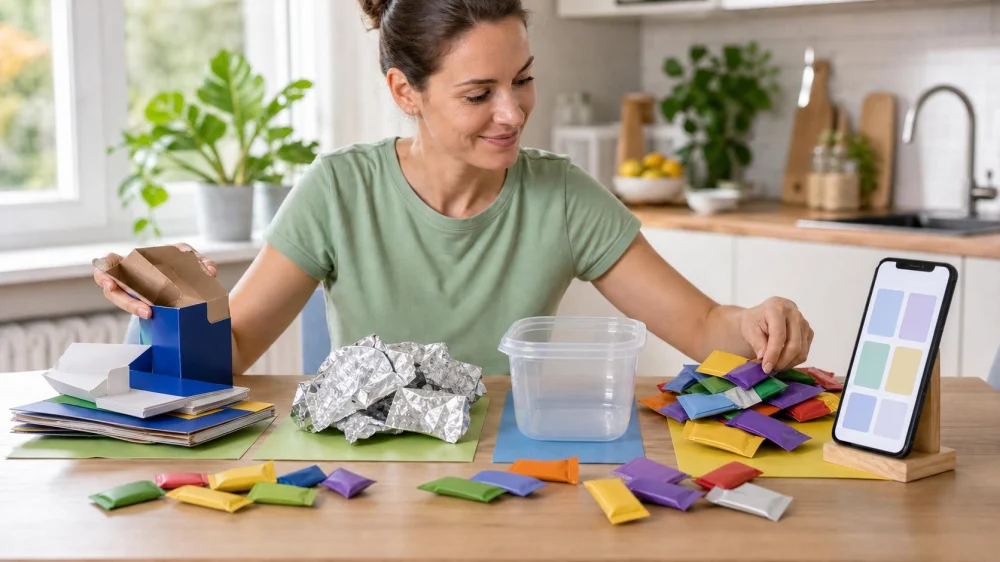
Do not put every candy wrapper in curbside recycling. Separate the empty package into paperboard, clean foil, rigid plastic, and flexible film or multilayer wrapper parts. Then check the exact local program for each material, size, and preparation rule. Flexible wrappers often need a special drop-off or trash, and store collection bins may accept only qualifying clean plastic film—not every shiny wrapper.

Neuhaus Chocolates / neuhaus chocolate near me
New YorkNew York CountyNew York
488 Madison Ave Between 51st, new location, E 52nd St, New York, NY 10022, USA
Separate the package into material parts
A single candy purchase can include several materials: an outer paperboard box, inner plastic tray, individual flexible wrappers, foil, paper cups, twist ties, stickers, and a rigid tub or lid. Recycling decisions apply to each part, not to the product name as a whole.
Disassemble only where pieces separate easily. Do not use scissors to cut a sealed pouch into tiny fragments or peel bonded layers apart. Very small loose pieces can be difficult for sorting equipment to capture even when the base material is recyclable in larger forms.

Schimpff's Confectionery / schimpffs
JeffersonvilleClark CountyIndiana
347 Spring St, Jeffersonville, IN 47130, USA
Use the local program's current guide
Find the official city, county, hauler, or transfer-station page for your address. Search by the actual item—“plastic film,” “aluminum foil,” “paperboard box,” or “rigid plastic tub”—rather than searching only for “candy wrapper.” Confirm:
- whether the material belongs in curbside recycling, a drop-off, compost, or trash;
- minimum size and accepted shapes;
- whether lids, windows, tape, or labels must be removed;
- how clean and dry the item must be; and
- whether items go loose in the cart or inside an approved container.
Rules differ because collection contracts, processing equipment, and end markets differ. A symbol, resin number, “recyclable” statement, or rule from another city does not guarantee local acceptance.
Check paperboard and paper pieces
Empty paperboard candy boxes are commonly accepted where community programs take paper products, but waxy coatings, bonded foil, plastic windows, heavy food residue, or very small size can change the answer. Flatten the box only if the local guide requests it and remove inserts when they are a different material.
Paper candy cups, liners, and wrappers may be coated or food-soiled. Do not assume they belong with clean paperboard. Check whether the local program accepts food-soiled paper for composting; if not, place rejected pieces in trash.
Check foil and rigid plastic
Clean aluminum foil may be accepted by some programs when formed into a sufficiently large ball, while foil laminated to paper or plastic is a different composite. The U.S. Environmental Protection Agency advises checking the local program's preparation requirements for foil.
Rigid tubs, jars, or trays should be empty and matched to accepted local shapes and resins. A recycling number identifies plastic resin; it is not a universal acceptance guarantee. Keep the lid on or remove it according to the local rule, and do not nest unrelated packaging inside the container unless instructed.
Handle flexible wrappers carefully
Many individual candy wrappers are flexible multilayer packaging made for barrier performance. They may combine plastic, metallic film, paper, inks, and adhesive. That structure can be difficult to process in ordinary curbside systems, and a shiny surface is not proof of aluminum content.
Retail plastic-film drop-offs often publish a narrow list of accepted bags and wraps. Use the drop-off operator's current instructions and any package-specific eligibility label. Do not add crinkly multilayer wrappers, biodegradable film, or unknown material simply because they bend. When the program cannot confirm acceptance, use trash.
Empty, clean, dry, and sort correctly
- Remove every candy, crumb, powder, and insert.
- Wipe or rinse only when the local program calls for it and the resource use is reasonable.
- Allow accepted containers or foil to dry.
- Keep rejected flexible wrappers out of the curbside bin.
- Place accepted items loose or bundled exactly as instructed.
- Save special-drop-off material in a clean, dry container until the next trip.
Do not place a bag full of mixed candy packaging in a recycling cart unless the program explicitly accepts bagged recyclables. Plastic bags can interfere with sorting equipment in many systems.
Candy packaging sorting checklist
- The package is fully empty.
- Easy-to-separate paper, foil, rigid plastic, and flexible film are sorted.
- The official local guide—not a generic symbol—confirms each item.
- Food-soiled, coated, or bonded paper is handled by the local rule.
- Foil meets the local cleanliness and minimum-size requirement.
- Rigid plastic is an accepted shape and resin in the program.
- Flexible wrappers go only to a program that explicitly names them.
- Unknown or rejected material stays out of recycling.
Limits and disposal cautions
This article provides general U.S. sorting guidance. Local recycling, composting, retail drop-off, and waste rules can change. Packaging also changes by candy size, factory, and market, so two similar products may use different materials.
Do not burn wrappers, melt plastics, dissolve coatings, or perform home material tests involving flame or chemicals. Keep empty packaging away from children and pets when small pieces, residue, or sharp foil edges could cause harm. Follow local household-waste instructions when uncertain.
Frequently asked questions
Does the recycling symbol mean curbside acceptance?
No. It may identify a material or provide a general claim, but the local collection program decides which items it accepts.
Can shiny candy wrappers go with aluminum foil?
Not automatically. Many shiny wrappers are multilayer film rather than plain foil. Use package information and the local program's accepted-item list.
Should I wash every wrapper?
Follow the program's preparation rule. Individual flexible wrappers that the program rejects should not be washed solely to place them in recycling.
Can I put wrappers in a store plastic-bag bin?
Only when that collection program explicitly accepts the wrapper type. Many bins accept qualifying bags and film but exclude multilayer or crinkly packaging.
Recycling sources
- U.S. EPA: How Do I Recycle Common Recyclables?
- U.S. EPA: Standardized Terms for Materials Accepted by Municipal Recycling Programs
- Your official local recycling or waste authority and the named drop-off operator are the primary sources for current acceptance.
Conclusion and next steps
The most useful recycling habit is accurate sorting, not optimistic sorting. Break the candy package into obvious material groups, check the current local list, prepare accepted items correctly, and keep unknown flexible wrappers out. One confirmed item is better than contaminating a bin with several guesses.





 Candy Castle4.0 (5 reviews)
 Wanda's Sugar Shack5.0 (1 reviews)
 IT'SUGAR Opry Mills3.0 (178 reviews)
 Sweet Tooth Candy4.0 (91 reviews)
 Grace's Candi & Co.4.0 (24 reviews)
 Dolcetta Artisan Sweets4.0 (27 reviews)
 Top Candy Shops for Tourists in New York – Best Sweets and Treats
 Best Candy Shops in New York - A Sweet Adventure Through the City
 How to Make Candy-Themed Crafts for Christmas Gift Giving
 How to Make Chocolate-Covered Strawberries for Kids: A Fun and Easy Recipe
 How to Make Easy Gummy Worms at Home | Homemade Candy Recipes
 How to Host a Candy-Themed Movie Night | Fun and Sweet Ideas