
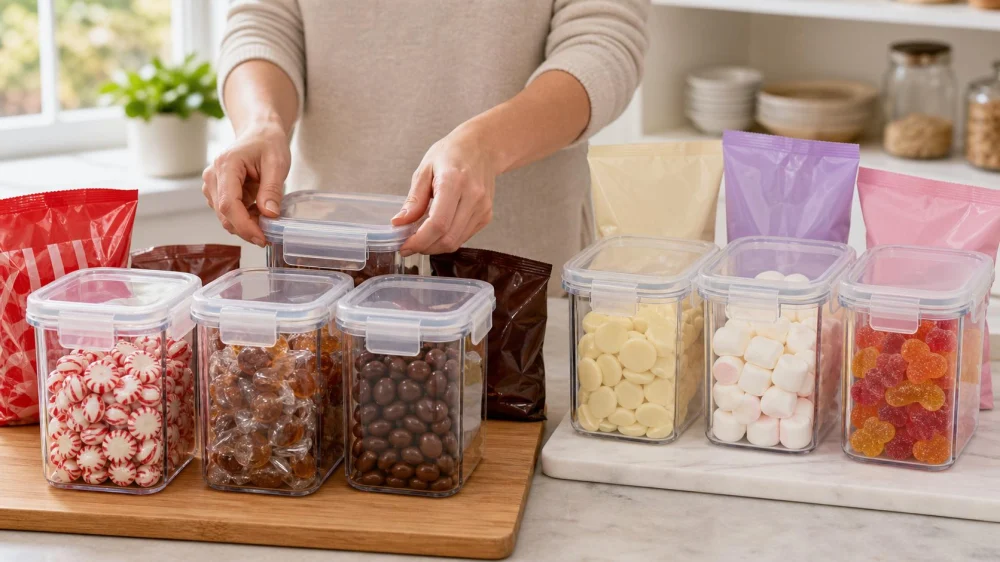
Candy Flavor Transfer: Keep Strong Aromas Separate
On this page
Quick answer
Keep mint, cinnamon, coffee, licorice, intensely sour, floral, and other strong-smelling candies in their original closed packages or separate airtight food-storage containers. Do not combine them with delicate chocolate, vanilla, marshmallow, cream, or fruit flavors just because the pieces are individually wrapped. Add a second sealed barrier for gift boxes or long storage, label the contents and date, and follow every manufacturer's storage directions.
Flavor transfer is primarily a quality problem, but mixed products can also create ingredient and allergen confusion. Never use smell or taste to prove that an unlabeled candy is safe for someone with an allergy or dietary restriction.

Schimpff's Confectionery / schimpffs
JeffersonvilleClark CountyIndiana
347 Spring St, Jeffersonville, IN 47130, USA
Why candy flavors migrate
People experience flavor through taste, aroma, texture, and temperature. Volatile aroma compounds can leave a strongly scented candy, collect in shared air or packaging, and be perceived when another piece is eaten. A neutral candy may taste minty even though no visible mint touched it.
Thin wrappers, folded ends, loosely closed bags, paper cups, cardboard dividers, and decorative boxes may not create a complete aroma barrier. Warm conditions can soften coatings, increase stickiness, and make ordinary packaging less protective. Time matters too: a mixed bowl served for an hour is different from a gift box stored for weeks.
Physical contact adds another route. Powder, sugar, oil, crumbs, or acidic coating can rub from one piece to another. The result may be a changed aroma, stained wrapper, softened surface, dull chocolate, sticky coating, or muddled flavor.
Droolin Moose / droolin moose
St. Louis ParkHennepin CountyMinnesota
5007 Excelsior Blvd, St Louis Park, MN 55416, USA
Identify high-impact candies
Make a quick inventory and flag products with aromas you can notice before opening the container. Common candidates include:
- peppermint, wintergreen, spearmint, menthol, and eucalyptus-style flavors;
- cinnamon, clove, anise, licorice, ginger, and other assertive spices;
- coffee, espresso, rum-flavored, smoky, or intensely roasted centers;
- rose, violet, lavender, and other floral candies;
- very sour powders and strongly flavored fruit chews;
- peanut, coconut, sesame, and nut-filled candies with recognizable aromas;
- novelty products with perfume-like or unusually persistent flavors.
Next, flag delicate receivers: plain milk or white chocolate, vanilla creams, marshmallows, mild caramels, and lightly flavored gummies. Separation matters most when a high-impact product and a delicate product would otherwise share a closed space.
Choose containers that really close
Use clean, dry containers intended for food storage. A lid should seat evenly without cracks, warping, missing seals, or candy trapped along the rim. Test an empty container by closing it normally and checking all sides; do not assume a decorative lid is airtight.
Keep original packaging when it provides the best seal, product identity, ingredient list, lot information, and best-by date. For an opened bag, press out excess air only when doing so will not crush the candy, then close it with its built-in zipper or a secure clip. Place that package inside a second sealed container when the aroma is powerful.
Do not repurpose a container that retains detergent, spice, coffee, candle, fragrance, or nonfood odors. Washing may not remove substances absorbed by some plastics. Avoid any container previously used for chemicals or a product that the container manufacturer does not approve for food.
Build separate storage zones
Create zones by aroma strength and product needs rather than by color. One bin can hold sealed mint products, another strong spice or licorice, and another delicate chocolate. Inside each bin, keep products in their own closed and labeled packages.
- Choose a cool, dry location away from direct sun, heat vents, appliances, and strong household odors.
- Follow the product label for temperature and refrigeration; candy types do not all need the same conditions.
- Write the opening date on a removable label without covering manufacturer information.
- Use older suitable stock first, but never mix batches in a way that loses identity.
- Inspect closures after each use and clean sticky rims before resealing.
- Keep candy away from pet food, scented trash bags, cleaners, paint, smoke, and fragranced products.
Refrigeration can introduce other problems, including condensation and odor exposure, so do not refrigerate by default. Follow the maker's directions and let a sealed package approach room temperature before opening when condensation is a concern.
Pack gifts and party favors
A beautiful mixed box should still respect flavor boundaries. Use sealed inner bags, lidded cups, or compartment inserts that limit both movement and shared air. Put mint, cinnamon, coffee, and floral items in separate inner packages. Do not let powdered sour candy sit against chocolate wrappers.
Label each product or include a complete product key that stays with the gift. Preserve original ingredient and allergen information when possible. If you cannot verify a candy, do not invent its identity or make “free from” claims.
Consider the delivery journey. A box may spend hours in a warm vehicle, a mailroom, or direct sunlight. Use packaging and shipping methods appropriate for the product and weather, and tell the recipient how to store the candy after arrival. Do not rely on fragrance-masking material; scented tissue and decorative potpourri create another source of odor.
Check candy before serving
Before adding stored candy to a bowl or gift, compare it with the original product description and package directions. Look for an unsealed package, moisture, unusual stickiness, leaking filling, melted or fused pieces, pests, foreign material, damaged wrappers, or a strong unexpected odor.
An aroma change may only affect enjoyment, but it also signals that the storage barrier did not work as planned. Do not rinse, perfume, bake, or otherwise attempt to “restore” candy. If the product is damaged, contaminated, recalled, outside labeled directions, or of uncertain identity, discard it.
For a quality question, contact the manufacturer with the product name, package size, lot code, best-by date, purchase location, and photos. For suspected tampering, illness, or an allergic reaction, stop serving the product and follow appropriate medical and reporting guidance.
Frequently asked questions
Can individually wrapped candies share one jar?
They can for short service when wrappers are intact and ingredient communication is clear, but individual wrappers vary in barrier quality. For longer storage or strong aromas, use separate sealed containers.
Will baking soda remove mint smell from candy?
Do not place baking soda or another odor absorber in direct contact with candy unless a product is specifically designed and instructed for that use. Prevention with separate barriers is more reliable than trying to reverse transfer.
Can I reuse a jar that held coffee?
Only if it is food-safe, thoroughly cleaned and dried, and has no retained odor or damage. If the jar or seal still smells like coffee, reserve it for coffee rather than delicate candy.
Does flavor transfer mean allergen cross-contact occurred?
A changed flavor does not prove what transferred, and no flavor change does not prove safety. Keep products identified and separated, retain labels, and use stricter controls for allergy needs.
Should chocolate and mint be stored in different rooms?
Usually separate sealed packages and containers are a practical starting point. Follow manufacturer directions and strengthen separation when storage is long or the aroma remains noticeable outside the closed package.
Sources and evidence notes
The FDA's consumer food-safety hub provides general principles for buying, storing, and serving food. The FDA Food Code is a model for retail food regulation and emphasizes suitable food-contact equipment, contamination prevention, and proper storage.
Product-specific instructions outrank a general candy checklist. Use the manufacturer's package for ingredients, allergen statements, best-by information, and storage directions. Local rules apply when candy is prepared or sold commercially.
Next steps
Open the candy cabinet and group products into strong-aroma, delicate, and ordinary categories. Move every opened strong-aroma product into a labeled second barrier, inspect container seals, and remove nonfood fragrances from the area. Before the next party or gift, pack a small test assortment for a day and check whether any flavor has migrated before assembling the full batch.



 Sweet Tooth Candy4.0 (91 reviews)
 Smith's Candies Root's Market5.0 (2 reviews)
 Lindt Chocolate Shop4.0 (316 reviews)
 Simply Sweet4.0 (91 reviews)
 Disney's Candy Cauldron4.0 (292 reviews)
 AJS wholesalers0.0 (0 reviews)
 Top Candy Shops for Tourists in New York – Best Sweets and Treats
 Best Candy Shops in New York - A Sweet Adventure Through the City
 How to Make Candy-Themed Crafts for Christmas Gift Giving
 How to Make Chocolate-Covered Strawberries for Kids: A Fun and Easy Recipe
 How to Make Easy Gummy Worms at Home | Homemade Candy Recipes
 How to Host a Candy-Themed Movie Night | Fun and Sweet Ideas