
Candy Buffet Utensil Checklist for Clean Self-Service
On this page
Quick answer
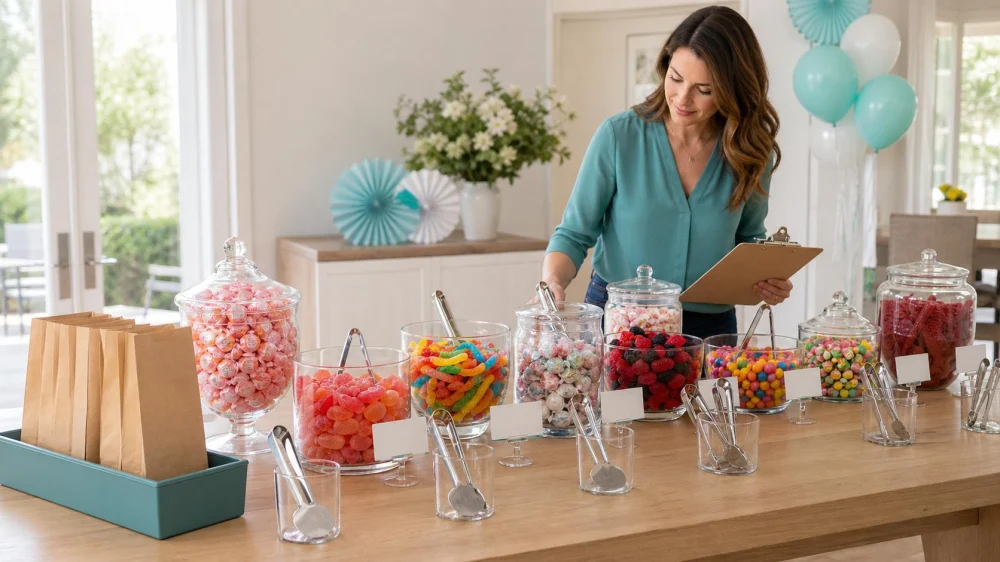
Give every candy container its own clean utensil, sized so the handle stays above the food and guests can use it without touching neighboring pieces. Place the buffet on a stable table away from pets, small children, direct sun, and crowded walkways. Keep original packages or ingredient records available, identify major allergens clearly, and designate one host to replace dropped tools, clean spills, and refill containers.
For a home party, this checklist is a practical adaptation of general U.S. food-safety principles. It is not a substitute for state or local rules that apply to a business, catered event, school, or public fundraiser.

MarieBelle / mariebelle chocolate
New YorkNew York CountyNew York
484 Broome St, New York, NY 10013, USA
Map one tool to each candy
Start with a written map before filling bowls. List each candy, its container, its utensil, and its ingredient or allergen reference. Assigning one tool to one product makes it easier to notice when a scoop migrates and reduces mixing between candies.
- Wrapped pieces: shallow tongs or a gravity dispenser can reduce hand contact with the shared container.
- Small hard candies: use a narrow scoop that fits the opening without scraping guests' hands on the rim.
- Gummies and soft chews: use tongs with a gentle, secure grip rather than a deep scoop that compresses the candy.
- Large pieces: use broad tongs long enough to reach the bottom while keeping fingers away from food.
- Powdered or very small candy: choose an enclosed dispenser or a scoop with a controlled pour.
Do not rely on color alone to match tools to bowls; lighting and similar-looking products can confuse guests. A small symbol or number on the holder and matching label is easier to verify, but the mark should be on the handle or stand, not a food-contact surface.
Mrs. Cavanaugh's Candies / mrs cavanaugh
1200 N Hill Field Rd, Layton, UT 84041, USA
Choose scoops, tongs, and dispensers
Use utensils intended for food contact, free of chips, rust, cracks, peeling coatings, loose joints, or sharp edges. The tool should be comfortable to operate with one hand and should not require a guest to reach inside the container.
A scoop needs enough capacity for a normal serving without encouraging an overflowing pour. Tongs should open and close smoothly without launching round candies. Test every combination with an empty bag or clean sample before the event. If the container is tall and narrow, a gravity dispenser may work better than a tool that can fall inside.
Provide a dedicated holder, small tray, or clip for each utensil. The resting position should keep the handle out of the candy and the food-contact end protected from the tabletop. Avoid decorative jars whose mouths are too narrow for both the tool and a guest's hand.
Set up a clean serving zone
Clean the table and food-contact equipment before setup, wash hands, and allow washed containers and utensils to dry fully. Moisture can damage candy texture and can make sugar residue spread across tools and surfaces.
- Use a level table that will not wobble when a dispenser lever is pressed.
- Leave enough space between containers for guests to operate tools without crossing over other candy.
- Put bags or cups at the beginning of the guest flow and a waste bin beyond the serving area.
- Keep backup utensils in a clean, covered box rather than loose on the table.
- Place napkins nearby for hands, but use separate cleaning supplies for the buffet.
- Keep purses, phones, gifts, floral soil, decorations, and personal drinks off the serving surface.
If children will serve themselves, use low, stable containers and adult supervision. Avoid heavy glass at an edge, dangling tablecloths, and candy pieces that are unsuitable for a child's age or chewing ability.
Label candy and allergen information
Keep the manufacturer's package until the event is over. A decorative name such as “rainbow bites” is not enough for a guest who needs the brand, ingredient list, or allergen statement. Photographing the complete package can provide a backup, but do not crop away warnings, lot information, or preparation directions.
Place each label beside its own container and prevent cards from swapping positions. If a candy contains or may contact a major allergen, make the notice easy to find before a guest starts serving. Never describe a candy as allergen-free unless the verified product information supports that claim and the setup prevents cross-contact.
Separate products when cross-contact matters. Separate bowls alone do not solve the problem if guests exchange scoops, utensils touch, or the same hands handle several products. For a guest with a serious allergy, an unopened, individually labeled package may be safer than a shared buffet; the guest should follow their own medical plan.
Run a safe refill routine
Choose one host or attendant to manage refills. Store unopened candy in its original packaging in a clean, dry area away from cleaning chemicals and personal items. Before refilling, compare the product and package to the container label.
Do not pour a new batch over old candy merely to make the display look full. First evaluate the remaining product and container for crumbs, foreign material, moisture, sticky buildup, or a misplaced utensil. Use a clean container and clean utensil for the new batch when needed. Keep different lots separate if traceability matters.
Refill with washed hands and without letting the package exterior touch the food or inside of the container. Close and store the remaining package promptly. Record the time and product if the buffet serves a large group or operates for many hours.
Handle dropped or misused utensils
Replace a utensil immediately if it falls on the floor, is handled by the food-contact end, is used in another product, touches a guest's mouth or personal cup, or becomes visibly soiled. Do not wipe it with a napkin and return it. Move it to a clearly marked “used” bin away from clean backups.
If a guest reaches into a container, drops an object into it, or returns candy after touching it, pause service. The host should assess the affected product and use a conservative response, especially for a public event or vulnerable guests. When contamination may have occurred, discard the affected candy and clean the container rather than guessing.
Clean spills promptly with supplies reserved for surfaces, not serving tools. Block access to broken glass or other physical hazards and discard exposed food around the breakage. For a commercial or permitted event, follow the responsible manager's procedure and local health requirements.
Frequently asked questions
Can one scoop serve candies that look similar?
No. Similar appearance does not mean identical ingredients, allergens, coatings, flavors, or manufacturing controls. One designated utensil per container is clearer and easier to monitor.
Should the scoop stay inside the candy?
Prefer a holder or design that protects the food-contact portion while keeping the handle out of the food. A tool buried in candy invites guests to touch the food while retrieving it.
Are disposable utensils automatically safer?
No. They still require clean storage, appropriate handling, and replacement after contamination. Reusable food-contact tools can work well when properly cleaned, sanitized as applicable, dried, and stored.
How often should utensils be replaced?
Replace them whenever contamination may have occurred and when they are damaged or soiled. A long or commercial event should follow applicable food-code and local requirements, not a casual household schedule.
Can leftover buffet candy be saved?
Only when the host can reasonably verify that it remained protected, dry, correctly identified, and within product directions. Discard candy exposed to uncertain handling, foreign material, moisture, pests, or cleaning chemicals.
Sources and evidence notes
The FDA Food Code is a model for retail and food-service rules; jurisdictions decide how to adopt it. Its equipment and utensil provisions support using suitable self-service utensils, preventing contamination, cleaning when contamination may have occurred, and cleaning before restocking self-service equipment.
The CDC's kitchen handwashing guidance supports washing hands during food preparation to reduce transfer of germs. Manufacturer labels remain the primary source for ingredients, allergen statements, storage, and product-specific handling.
Next steps
Before shopping, draw the buffet from left to right and count containers, matched utensils, holders, labels, guest bags, and clean backups. At setup, test every tool, photograph the final labels, and assign one person to monitor the table. After service, separate used equipment from clean supplies, discard questionable food, and save package details until guests have gone.





 Sweet Tooth Candy4.0 (91 reviews)
 Smith's Candies Root's Market5.0 (2 reviews)
 Lindt Chocolate Shop4.0 (316 reviews)
 Simply Sweet4.0 (91 reviews)
 Disney's Candy Cauldron4.0 (292 reviews)
 AJS wholesalers0.0 (0 reviews)
 Top Candy Shops for Tourists in New York – Best Sweets and Treats
 Best Candy Shops in New York - A Sweet Adventure Through the City
 How to Make Candy-Themed Crafts for Christmas Gift Giving
 How to Make Chocolate-Covered Strawberries for Kids: A Fun and Easy Recipe
 How to Make Easy Gummy Worms at Home | Homemade Candy Recipes
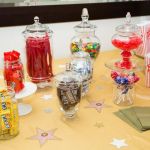 How to Host a Candy-Themed Movie Night | Fun and Sweet Ideas