Truffles, Pralines, and Bonbons: A Chocolate Counter Guide
Table of contents
Quick answer
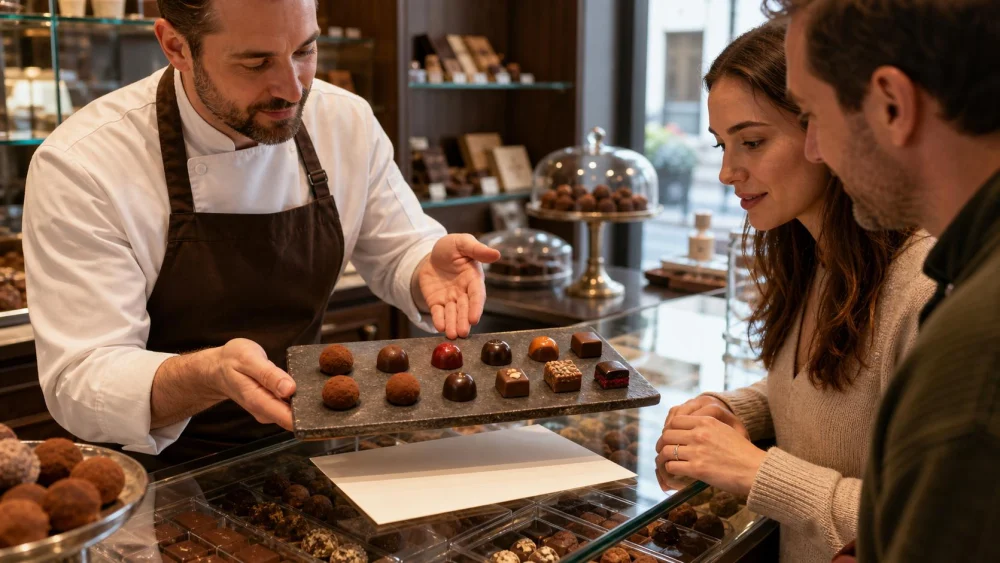
At a chocolate counter, a bonbon usually has a defined chocolate shell around a filling, while a truffle often centers on ganache and may be hand-rolled or coated. “Praline” can mean a nut paste filling in European-style chocolates or a distinct cooked sugar-and-nut confection in parts of the United States. Shop terminology varies, so ask about shell, center, nuts, alcohol, texture, sweetness, storage, and best eating window before building a box.
Alpine Chocolat Haus / alpine chocolat haus
322 S Main St, Plymouth, MI 48170, USA
What a bonbon usually means
A bonbon is a small finished confection, commonly moulded or enrobed in chocolate with a separate center. The shell can be thin and crisp or thicker and more substantial. Fillings range from caramel and ganache to fruit gel, nut paste, fondant, marshmallow, or layered combinations. Painted colors and shapes may identify flavors, but the shop’s guide—not appearance alone—is the reliable reference.
Sugar Planet / sugar planet ocean city md
Ocean CityWorcester CountyMaryland
407 Atlantic Ave, Ocean City, MD 21842, USA
How truffles differ
Chocolate truffles traditionally resemble the uneven shape of the namesake fungus. Many use a ganache center made from chocolate and cream, then add cocoa powder, chopped nuts, tempered chocolate, or another coating. Modern stores also call smooth moulded pieces “truffles,” especially when the center is ganache. Expect a softer, meltier texture than a firm caramel or nut crunch, but ask because recipe and naming styles vary.
Why praline can mean two things
In many European chocolate contexts, praline or praliné describes a smooth or textured preparation of caramelized nuts and sugar, often hazelnut or almond, used inside chocolates. In U.S. regional traditions, especially Louisiana, a praline can be a standalone candy made from cooked sugar, dairy, and pecans with a soft or grainy set. Pronunciation, texture, and ingredients differ, so use the full description rather than the single word.
Compare common fillings
- Ganache: smooth chocolate-and-cream style center, sometimes infused.
- Caramel: ranges from flowing and buttery to firm and chewy.
- Praliné: nut-forward paste or crunch with roasted, caramelized notes.
- Gianduja: finely blended chocolate and nut paste, often very smooth.
- Fruit: jam, pâte de fruit, gel, curd, or spirit-infused layers.
- Fondant or cream: sweet, soft centers flavored with vanilla, mint, fruit, or spice.
Build a balanced box
Choose across texture and intensity: one dark ganache, one milk chocolate caramel, one nut piece, one fruit center, and one crisp or unusual option creates range. Ask the chocolatier to avoid several nearly identical fillings and to arrange pieces in tasting order from delicate to intense. For gifts, include a flavor map and storage note. Select a smaller fresh box when cream or fruit centers have a short best-eating window.
Counter checklist
Ask for piece name, chocolate type, shell or coating, filling, nut content, alcohol, coffee, spice, texture, sweetness, date made, storage temperature, refrigeration guidance, best-eating window, and flavor map. Confirm price by piece, weight, or box; substitutions; gift packaging; and travel time. Keep the box away from direct sun, car heat, strong odors, and moisture during transport.
Terms, allergens, and storage limits
This guide describes common confectionery usage, not universal recipes. Milk, eggs, nuts, peanuts, soy, wheat, sesame, alcohol, and other ingredients or cross-contact may be present even when a flavor name does not mention them. Ask the shop for current ingredient and allergen information and follow individual medical guidance. Storage instructions depend on filling, packaging, climate, and recipe; the chocolatier’s label takes priority.
Evidence notes
The strongest evidence is the maker’s current production sheet: chocolate couverture, filling formula, allergen controls, date, storage, and intended shelf life. Shape, decoration, and familiar names are descriptive clues but can mislead across regions and shops. A counter card paired with staff confirmation is more useful than assuming every “truffle” is rolled or every “praline” is the same confection.
Frequently asked questions
Is every round chocolate a truffle?
No. Shape alone does not define the center or method; ask whether it contains ganache or another filling.
Are bonbons always filled?
They commonly are at chocolate shops, but terminology varies. Confirm the specific piece.
Does praline always contain pecans?
No. European-style praliné often uses hazelnuts or almonds, while some U.S. pralines feature pecans.
Should filled chocolates be refrigerated?
Follow the maker’s instructions. Refrigeration can affect condensation and texture and is not always recommended.
Which pieces should be tasted first?
Start with delicate milk, fruit, or floral centers and move toward dark, coffee, spice, and strong nut flavors.
Next steps
Choose a mix of shells, centers, textures, and chocolate intensities; confirm allergens, alcohol, storage, and freshness; request a flavor map; and transport the box in a stable, cool, dry place. Taste delicate pieces first and save the maker’s notes so favorite fillings—not just decorative colors—can be ordered again.


 Old Fashioned Candy Store3.0 (10 reviews)
 Sugar Drop Candy Shop3.0 (139 reviews)
 What The Actual Fudge5.0 (1 reviews)
 Trina's Treats4.0 (109 reviews)
 Patsy's Hemp5.0 (12 reviews)
 Bulk Food Of Garden City4.0 (377 reviews)
 Top Candy Shops for Tourists in New York – Best Sweets and Treats
 Best Candy Shops in New York - A Sweet Adventure Through the City
 How to Make Candy-Themed Crafts for Christmas Gift Giving
 How to Make Chocolate-Covered Strawberries for Kids: A Fun and Easy Recipe
 How to Make Easy Gummy Worms at Home | Homemade Candy Recipes
 How to Host a Candy-Themed Movie Night | Fun and Sweet Ideas