
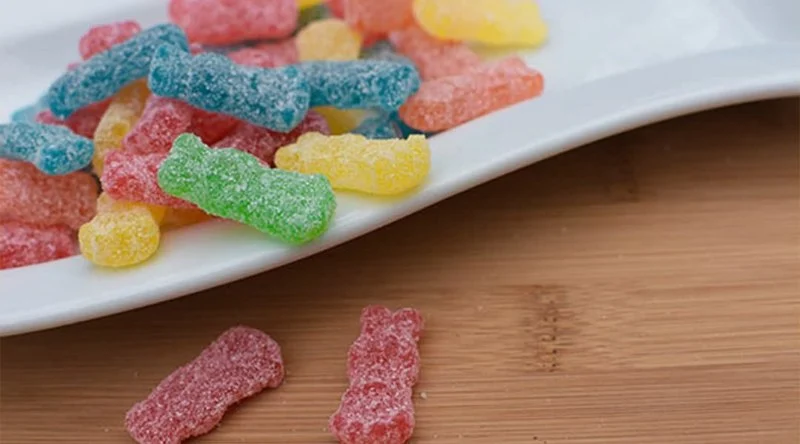
The Secret Behind Sour Patch Kids “First Bite Sour, Then Sweet” Chemical Reaction Explained
- sour-candy-coating-science-explained
- how-pH-reactions-create-flavor-shifts
- inside-the-sugar-and-acid-layer-system
- real-world-candy-manufacturing-example
- why-the-sensory-flip-keeps-consumers-hooked
Why Sour Patch Kids Feel Like Two Candies in One Bite
The moment you bite into a Sour Patch Kids candy, your taste buds experience something unusual: a sharp sour shock followed by a smooth, sweet finish. This isn’t an accident—it’s a carefully engineered candy flavor transformation designed through food chemistry and coating science.
The phrase “first bite sour, then sweet” is more than marketing—it reflects a controlled sour candy coating process that manipulates how acids and sugars dissolve in your mouth over time.
At the core of this experience lies Sour Patch Kids chemistry, where acidity, sugar layering, and saliva interaction create a timed sensory shift.
Droolin Moose / droolin moose
St. Louis ParkHennepin CountyMinnesota
5007 Excelsior Blvd, St Louis Park, MN 55416, USA
The Science of the Sour Layer: How the First Shock Happens
The sour sensation comes from a thin coating of organic acids such as citric acid and tartaric acid. These acids sit on the surface of the candy and dissolve instantly when they meet moisture.

Chutters / chutters littleton nh
LittletonGrafton CountyNew Hampshire
43 Main St, Littleton, NH 03561, USA
Acid Activation and Immediate Taste Response
When the candy enters your mouth, saliva triggers rapid dissolution of the acid layer. This creates a low pH environment on your tongue, which is interpreted by taste receptors as “sour.” This is the foundation of the candy pH reaction effect.
Why the Sour Doesn’t Last Long
The acid layer is intentionally thin. Once it dissolves, it quickly gives way to the underlying sugar structure. This controlled transition is what makes the experience feel like a “flip” rather than a continuous sour taste.
The Sweet Transformation: What Happens After the First Bite
After the acid layer dissolves, the candy’s inner structure—made primarily of sugar and corn syrup solids—takes over. This is where the sweetness emerges and dominates the flavor profile.
Sugar Layer Dissolution and Flavor Shift
The inner sugar matrix dissolves more slowly than the acid coating. As a result, the brain perceives a delayed sweetness that replaces the sour intensity. This is the key to the sour then sweet mechanism.
How Texture Supports Flavor Perception
The chewy consistency of Sour Patch Kids also plays a role. Chewing gradually exposes more sugar content, extending the sweet phase and enhancing the contrast effect.
Inside the Factory: How Sour Patch Kids Are Actually Made
The production of Sour Patch Kids is a layered process involving controlled deposition of acids and sugars onto a gummy base.
First, the gummy core is formed using gelatin or pectin. Then, a sour solution is sprayed or tumbled onto the surface. Finally, a fine sugar coating seals the structure and stabilizes the candy for packaging.
This multi-stage approach is what creates the precise timing of flavor release in every bite.
Real Example: Why a “Perfect Sour Bite” Went Viral Online
In a widely shared social media experiment, candy enthusiasts analyzed how different batches of Sour Patch Kids produced slightly different sour intensities. One batch had a noticeably stronger initial sour punch, leading to viral discussions about coating consistency.
Food science experts later explained that humidity during coating and minor variations in acid distribution can affect how intense the first bite feels. This real-world curiosity shows how sensitive food chemistry candy systems can be.
Why the Sour-to-Sweet Flip Is So Addictive
From a sensory psychology perspective, the brain enjoys contrast. Rapid shifts from sour to sweet activate reward pathways more strongly than steady flavors.
Neurological Reward Response
The sudden sweetness after sour stimulation triggers dopamine release, reinforcing the desire to repeat the experience. This is why many people reach for another piece immediately after the first.
Expectation vs Reality in Taste Design
The candy intentionally violates expectation. Your brain anticipates continued sourness, but instead receives sweetness, creating a pleasurable surprise effect.
How Food Chemists Control Flavor Timing
Manufacturers carefully adjust acid particle size, coating thickness, and sugar crystallization rates to control how quickly each layer dissolves.
Precision in Acid Distribution
Even slight changes in acid concentration can alter perceived sour intensity. Engineers fine-tune this to ensure consistency across millions of candies.
Moisture Sensitivity and Shelf Stability
Humidity exposure can weaken the sour coating over time, which is why packaging plays a critical role in preserving the intended flavor sequence.
Why Sour Patch Kids Are a Masterclass in Sensory Engineering
What seems like a simple candy is actually a carefully designed sensory system. Every layer serves a purpose—from immediate sour impact to delayed sweetness and chewy texture satisfaction.
Understanding Sour Patch Kids chemistry reveals how modern food engineering blends science and psychology to shape everyday experiences.
For those curious about similar candy science or exploring curated sweets inspired by flavor chemistry, Gaias Candy offers collections that highlight unique taste mechanics and innovative confectionery designs.
The Hidden Science Behind Everyday Candy Enjoyment
Next time you eat a Sour Patch Kids candy, you are experiencing a controlled chemical sequence: acid activation, sugar transition, and sensory reward response—all engineered for maximum flavor contrast.
What feels like simple enjoyment is actually a carefully orchestrated sour candy coating process rooted in food science and human perception.




 Gourmet Apple Cart4.0 (13 reviews)
 The Candy Store4.0 (83 reviews)
 Malley's Chocolates4.0 (156 reviews)
 Russell Stover Chocolates4.0 (821 reviews)
 Ben & Bill's Chocolate Emporium of Martha's Vineyard4.0 (219 reviews)
 Handmade with Love5.0 (42 reviews)
 Top Candy Shops for Tourists in New York – Best Sweets and Treats
 Best Candy Shops in New York - A Sweet Adventure Through the City
 How to Make Candy-Themed Crafts for Christmas Gift Giving
 How to Make Chocolate-Covered Strawberries for Kids: A Fun and Easy Recipe
 How to Make Easy Gummy Worms at Home | Homemade Candy Recipes
 How to Host a Candy-Themed Movie Night | Fun and Sweet Ideas