
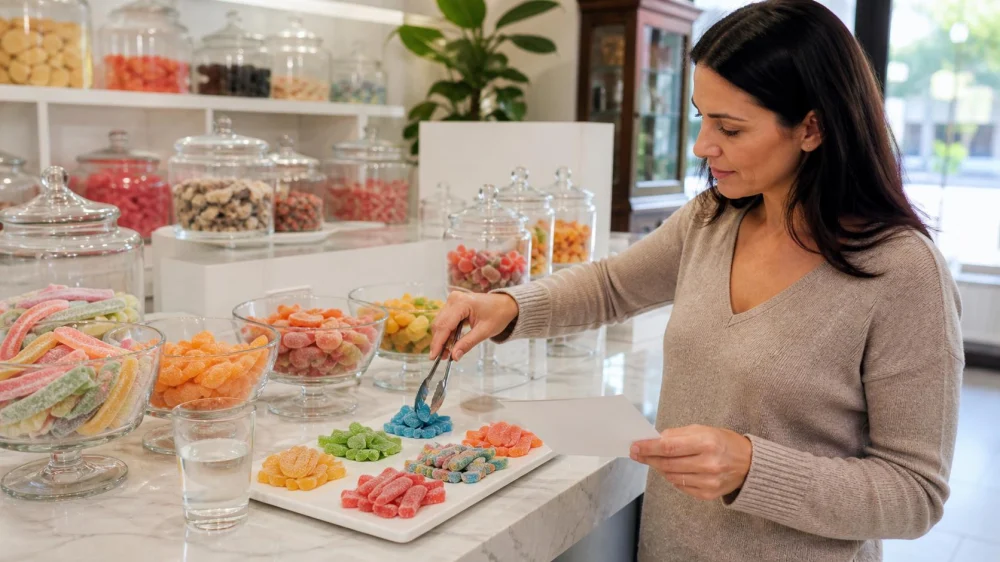
Sour Candy Guide: Acidity, Texture, and Tooth-Friendly Habits
Quick answer
Choose sour candy by both acidity and texture, not color alone. Read the ingredient and allergen label, buy an amount you can portion, and avoid slowly grazing on acidic candy for hours. Have it with or after a meal, drink plain water afterward, and follow your dentist’s advice before brushing after an acidic food.

Sugar Planet / sugar planet ocean city md
Ocean CityWorcester CountyMaryland
407 Atlantic Ave, Ocean City, MD 21842, USA
What makes candy sour
Sourness usually comes from food acids such as citric, malic, tartaric, lactic, or fumaric acid. A powder coating can deliver an immediate sharp hit, while acid mixed through a gummy or hard candy can build as it dissolves. The acid blend, sugar, flavor, and texture all change what you perceive.
A candy that tastes less intense is not necessarily acid-free, and a brightly colored candy is not necessarily more sour. Use the ingredient list and product description instead of guessing from appearance. “Sour,” “tangy,” and “extreme” are flavor descriptions, not standardized measures of acidity.

Sweet Expressions By Geri / sweet expressions
DenvilleMorris CountyNew Jersey
26 Broadway, Denville, NJ 07834, USA
Compare sour candy styles
- Powder-coated gummies: quick sour impact, chewy center, and a coating that may transfer moisture.
- Sour belts and ribbons: broad surface area, flexible chew, and often a crystal coating.
- Hard sour candy: slow release and longer contact time if sucked rather than chewed.
- Filled candy: sweetness outside with a sour powder, gel, or liquid center.
- Foam or aerated gummies: softer bite and a different melt than dense gelatin candy.
Texture matters for dental work, swallowing ability, and personal comfort. Very sticky candy can cling around brackets, retainers, crowns, and grooves. Hard pieces can chip teeth or restorations if bitten. Children and anyone with swallowing difficulty need age-appropriate choices and close supervision.
Read the package
Check the serving size, added sugars, ingredient order, allergen statement, best-by date, and storage directions. Sugar-free candy may contain sugar alcohols or high-intensity sweeteners; it is not automatically calorie-free, acid-free, or suitable for unlimited portions. Some sugar alcohols can cause digestive discomfort when eaten in larger amounts.
If candy is sold from a bulk bin, ask to see the current original ingredient and allergen information. Do not rely on a handwritten flavor card when an allergy or dietary restriction matters. Packaging can change, so recheck even for a familiar product.
Reduce acid exposure
The American Dental Association explains that dietary acids can wear away enamel over time and advises limiting sour foods and drinks. Frequency and contact time matter: repeatedly reaching for one piece after another extends the acid exposure. A defined portion at one occasion is generally easier to manage than all-day grazing.
- Eat sour candy with or shortly after a meal rather than continuously between meals.
- Drink plain water afterward to help clear residue.
- Do not hold a sour piece against one tooth or cheek.
- Follow your dentist’s advice about when to brush after acidic foods; immediate aggressive brushing may add abrasion while enamel is softened.
- Keep regular dental visits and ask about sensitivity, erosion, braces, or restorations.
Plan a portion
Put a chosen amount in a small bowl and close the package before eating. This makes the portion visible and protects the remainder from damp hands. Pair the tasting with a meal or snack that is not acidic, and avoid combining it with soda, sports drinks, or citrus beverages that add another acid source.
For a tasting flight, compare two or three pieces by aroma, first sour impression, sweetness, chew, and finish. You do not need to finish each piece. Spit out anything unexpectedly hard, sharp, stale, or unpleasant rather than forcing the bite.
Check allergens and cross-contact
In the United States, packaged foods must identify major food allergens used as ingredients. Candy can contain milk, peanuts, tree nuts, wheat, soy, egg, or sesame, and shared equipment may create cross-contact concerns. Read the full label every time and follow the allergy care plan.
For an unpackaged candy counter, ask staff to check the manufacturer’s current information and explain how scoops, bins, and work surfaces are managed. If the answer is uncertain, choose a sealed product with a complete label. An allergic reaction involving breathing trouble, throat tightness, collapse, or multiple body systems is an emergency; use prescribed epinephrine and call emergency services according to the person’s plan.
Store it well
Close the package tightly and keep it in a cool, dry place away from direct sun and strong odors. Moisture can dissolve coatings and make pieces sticky; heat can deform gummies or cause filled candy to leak. Keep candy out of reach of children and pets. Transfer to a container only if you also preserve the product name, ingredients, allergens, lot code, and best-by date.
Store counter checklist
- Package or bin looks clean, dry, and undamaged.
- Ingredient and allergen details are available.
- Texture suits the eater’s age, teeth, and dental work.
- Best-by date and storage conditions are acceptable.
- Serving amount is clear before purchase.
- Separate scoop or tongs are used for each bulk bin.
- Plain water is available after tasting.
Limitations and warnings
This guide is general shopping information, not dental, allergy, nutrition, or medical advice. People with enamel erosion, dry mouth, reflux, diabetes, braces, extensive dental work, swallowing disorders, or food allergies should ask the appropriate clinician for individualized guidance. Candy is not suitable for infants, and small hard or chewy pieces can be choking hazards.
Sources and evidence
Primary references include the American Dental Association’s MouthHealthy guidance on dietary acids and candy, which discusses sour foods and enamel exposure, and the U.S. Food and Drug Administration’s Food Allergies guidance, which explains major-allergen labeling and cross-contact. Use the current product label and advice from your dentist or physician for decisions specific to you.
Frequently asked questions
Is sour candy worse than sweet candy for teeth?
Sour candy can combine fermentable carbohydrate with dietary acid. Risk still depends on amount, frequency, contact time, oral health, and the exact product. Ask your dentist about your own erosion and cavity risk.
Should I brush immediately afterward?
Rinse or drink plain water first and follow your dentist’s timing advice. The ADA cautions that acids can soften enamel, so aggressive immediate brushing may be unhelpful.
Does sugar-free mean tooth-safe?
No. A sugar-free candy can still contain dietary acids and remain sticky or hard. Check the ingredients and treat “sugar-free” as one product feature, not a complete safety claim.
Why did the coating turn wet?
Humidity, heat, or an incompletely closed package can pull moisture into the sugar-acid coating. If the candy smells unusual, leaks, shows mold, or the package is damaged, discard it.
Conclusion
A good sour candy choice balances flavor with texture, label information, portion, and storage. Compare the acid delivery and chew, protect against allergen uncertainty, keep the package dry, and limit repeated exposure. Plain water and a planned eating occasion are simple habits; individualized dental or medical concerns belong with a qualified clinician.






 Saddleback Chocolates4.0 (43 reviews)
 Rocket Fizz4.0 (392 reviews)
 Chocolate Moonshine co5.0 (4 reviews)
 Sugar Bear Candy Store - Candy Store in Bergen Town Center4.0 (23 reviews)
 Thomas Chocolate4.0 (15 reviews)
 Cocoa Vienna4.0 (170 reviews)
 Top Candy Shops for Tourists in New York – Best Sweets and Treats
 Best Candy Shops in New York - A Sweet Adventure Through the City
 How to Make Candy-Themed Crafts for Christmas Gift Giving
 How to Make Chocolate-Covered Strawberries for Kids: A Fun and Easy Recipe
 How to Make Easy Gummy Worms at Home | Homemade Candy Recipes
 How to Host a Candy-Themed Movie Night | Fun and Sweet Ideas