
Licorice Candy Guide: Flavor, Texture, and Label Checks
Quick answer
“Licorice candy” can mean a flavor family, not proof that the product contains licorice root. Compare sweet, salty, herbal, fruit, and anise-forward styles; choose the chew you enjoy; and read the complete label. If real licorice or licorice extract is listed, people with certain conditions, pregnancy, or medicines should ask a clinician before eating it regularly.

The Ganachery / the ganachery
Lake Buena VistaOrange CountyFlorida
1486 East Buena Vista Drive, Disney Springs, Town Center, Lake Buena Vista, FL 32830, USA
What licorice candy means
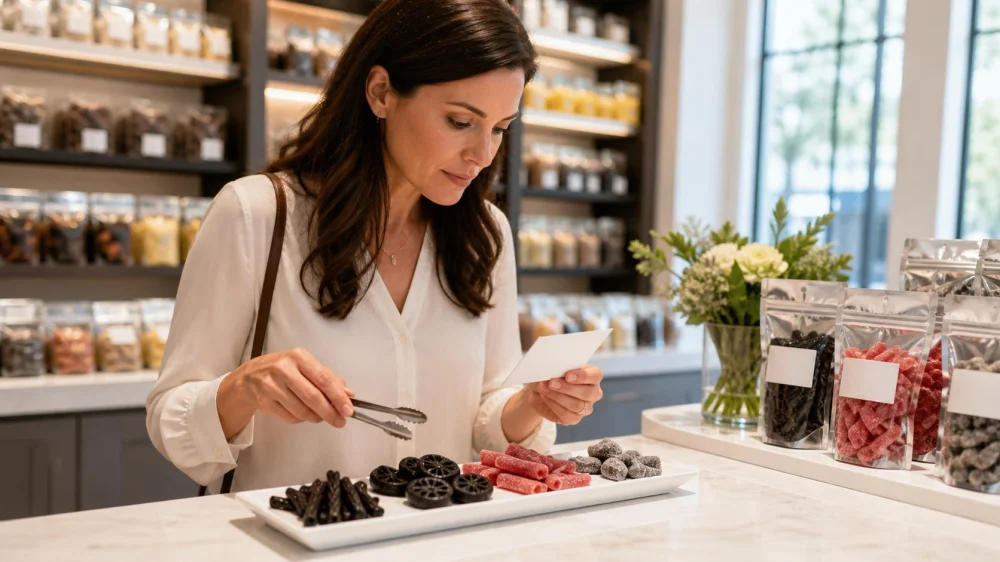
In the United States, many black candies get their familiar aroma mainly from anise flavor rather than actual licorice root. Other products use licorice extract, molasses, salt, herbs, fruit flavor, or combinations. Red twists are often fruit-flavored and may contain no licorice ingredient at all.
The name therefore does not tell you the formula. Look for terms such as licorice extract, licorice root, Glycyrrhiza, anise oil, natural flavor, molasses, ammonium chloride, or fruit flavor. Ask for the manufacturer’s current label when buying from an open display.

Lily Grapes USA LLC / candy grapes near me
1320 Westmont Rd SW, Atlanta, GA 30311, USA
Compare flavor styles
- Sweet black: anise-forward, molasses-like, or mildly herbal.
- Salty licorice: combines sweetness with salt and sometimes ammonium chloride for a strong mineral note.
- Soft fruit twists: berry, cherry, or other fruit flavors with a familiar rope shape.
- Herbal or traditional: may contain actual licorice extract and layered spice notes.
- Filled or coated: a contrasting cream, chocolate, sugar, or salty center and shell.
Country and maker traditions vary. “Double salt,” “soft,” or “Finnish-style” can guide expectations, but these are not universal standards. Start with a small package when exploring an unfamiliar style.
Choose a texture
Fresh soft twists should flex without feeling wet or slimy. Dense plugs and coins may give a longer chew. Firm pipes or wheels can be deliberately sturdy, while sugar-coated pieces add an initial crunch. Texture changes with temperature and humidity, so compare products at normal room conditions.
Very sticky pieces can pull at braces, temporary dental work, or loose restorations. Hard pieces can damage teeth if bitten. Anyone with swallowing difficulty needs an appropriate size and texture; small pieces are choking hazards for young children.
Read the ingredient list
Check serving size, added sugars, sodium, ingredient order, colors, sweeteners, and any storage direction. Salty styles may have considerably more sodium than expected from candy. Sugar-free versions may contain sugar alcohols that cause digestive discomfort for some people when eaten in larger amounts.
Do not treat “natural,” “traditional,” or “herbal” as a health claim. Candy remains candy, and licorice root is not a proven treatment for a health condition. A complete label is more useful than the color or marketing name.
Check for real licorice root
Licorice root contains glycyrrhizin. The National Center for Complementary and Integrative Health warns that large amounts or long-term intake can cause serious effects, including abnormal heart rhythm, and that risk can be higher for people with high blood pressure or heart or kidney conditions. Licorice can also interact with medicines.
If the ingredient list names licorice root, licorice extract, Glycyrrhiza, or glycyrrhizin, do not assume unlimited intake is safe. Ask a physician or pharmacist before regular use if you are pregnant, have high blood pressure, heart or kidney disease, eat a high-salt diet, or take prescription medicine. Seek urgent medical help for weakness, severe headache, swelling, chest symptoms, fainting, or a fast or irregular heartbeat after substantial intake.
Check allergens
Licorice candy may contain wheat flour, milk, soy, sesame, egg, peanuts, or tree nuts, depending on the style. U.S. packaged-food labels must identify major allergens used as ingredients. Read the entire label each time because recipes and factories can change.
For bulk candy, ask staff for original label information and cross-contact procedures. Shared scoops and bins can undermine separation. If an allergy is severe and the answer is uncertain, choose an individually sealed product with clear labeling.
Taste and portion deliberately
- Select two or three contrasting pieces rather than a large mixed bag.
- Note aroma before chewing: anise, fruit, molasses, herbs, or salt.
- Take a small bite and assess softness, elasticity, stickiness, and finish.
- Drink plain water between styles rather than adding a sweet beverage.
- Close and store the rest after the planned portion.
A tasting portion also reduces the chance of discovering too late that a salty or intensely herbal style is not for you. Do not encourage rapid-eating challenges, especially with dense or hard pieces.
Store for better texture
Follow the package direction. In general, reseal candy in a cool, dry place away from sunlight, heat, and strong odors. Too much air can make soft candy firm; humidity can make coatings sticky. Keep original packaging or transfer the ingredient, allergen, lot, and date information with the candy.
Discard pieces with mold, pests, unexpected moisture, leaking filling, a rancid or chemical odor, or damaged packaging. A harmless texture change and spoilage are not always easy to distinguish, so when in doubt, do not taste-test to investigate.
Buying checklist
- Flavor source is understood: anise, fruit, real licorice, or a blend.
- Texture fits the eater’s teeth and swallowing ability.
- Ingredient, allergen, sodium, and serving details are readable.
- Real licorice warnings are considered.
- Package and seal are intact.
- Best-by date and storage are acceptable.
- A small first-time portion is available.
Limitations and warnings
This is a candy-shopping guide, not medical or nutrition advice. It cannot determine a safe amount of glycyrrhizin for an individual because products and health factors differ. People with hypertension, heart or kidney disease, pregnancy, medication use, food allergies, diabetes, dental work, or swallowing concerns should obtain individualized advice.
Sources and evidence
Primary references include the National Institutes of Health’s NCCIH fact sheet “Licorice Root: Usefulness and Safety,” which explains glycyrrhizin risks and medication concerns, and the U.S. Food and Drug Administration’s Food Allergies guidance for major-allergen labeling. The product’s current label remains the source for its actual ingredients.
Frequently asked questions
Does red licorice contain licorice?
Often it is fruit-flavored, but the name alone cannot answer. Read the ingredient list for licorice root, extract, Glycyrrhiza, or glycyrrhizin.
Is anise the same as licorice root?
No. They are different plants, though anise has a similar aroma and is often used to create a licorice-like flavor.
Why is salty licorice so intense?
Some styles combine licorice or anise flavor with salt and ammonium chloride. The balance can taste mineral, savory, sharp, or cooling to someone unfamiliar with it.
Can I soften licorice that has become firm?
Resealing may slow further drying, but adding moisture can create uneven texture or spoilage risk. Follow maker instructions and replace candy that is very old, damaged, or questionable.
Is occasional candy the same as a licorice supplement?
No. Formulas and concentrations differ. However, a candy containing real licorice still deserves label checks, especially with relevant health conditions or medicines.
Conclusion
Licorice candy spans far more than one black twist. Compare flavor source, salt, chew, allergens, and freshness, then start with a modest portion. Most importantly, check whether real licorice is present. That small label detail changes the conversation from taste alone to possible health and medication considerations.





 Saddleback Chocolates4.0 (43 reviews)
 Rocket Fizz4.0 (392 reviews)
 Chocolate Moonshine co5.0 (4 reviews)
 Sugar Bear Candy Store - Candy Store in Bergen Town Center4.0 (23 reviews)
 Thomas Chocolate4.0 (15 reviews)
 Cocoa Vienna4.0 (170 reviews)
 Top Candy Shops for Tourists in New York – Best Sweets and Treats
 Best Candy Shops in New York - A Sweet Adventure Through the City
 How to Make Candy-Themed Crafts for Christmas Gift Giving
 How to Make Chocolate-Covered Strawberries for Kids: A Fun and Easy Recipe
 How to Make Easy Gummy Worms at Home | Homemade Candy Recipes
 How to Host a Candy-Themed Movie Night | Fun and Sweet Ideas