How to Check Candy Allergens Before Filling a Shared Bowl
On this page
- Quick answer
- Ask about allergies before buying
- Read every current package label
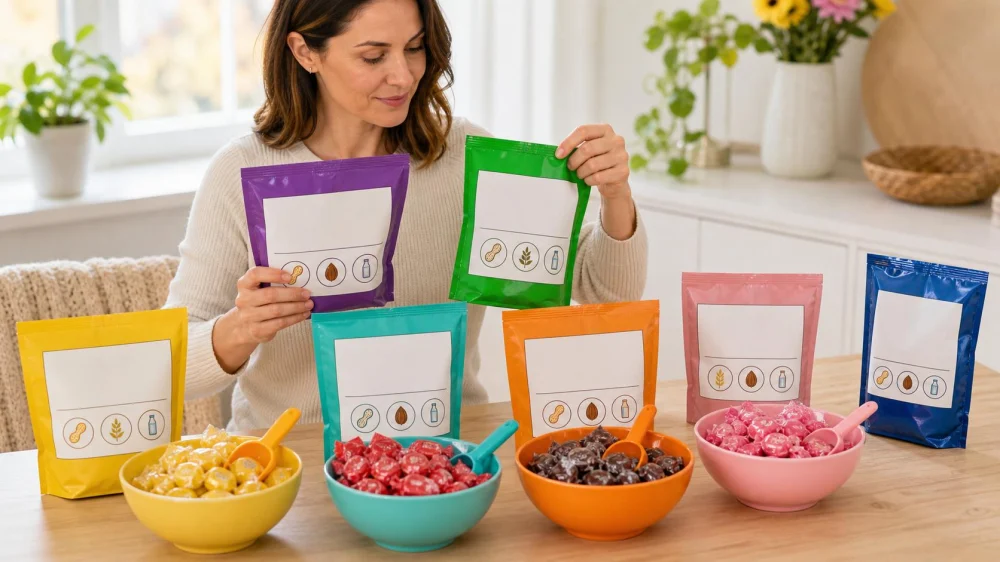
- Keep candy identified and separated
- Serve without losing information
- Prepare for an allergic reaction
- Shared candy bowl checklist
- Limitations and urgent warnings
- Frequently asked questions
- Official sources and evidence notes
- Keep the original packages beside the bowl
Quick answer
Ask guests about food allergies before buying candy. Read the full current label on every size and variety, including ingredients, “Contains” statements, and advisory statements. Keep wrappers and original packages available, do not mix unwrapped candy, and use separate clean bowls and utensils for different allergen profiles. A candy without an advisory statement is not automatically safe for every person, and a host should never decide that a small amount is safe for someone with an allergy.
When the exact product or cross-contact risk is unclear, offer a sealed clearly labeled alternative or no food at all.

The Ganachery / the ganachery
Lake Buena VistaOrange CountyFlorida
1486 East Buena Vista Drive, Disney Springs, Town Center, Lake Buena Vista, FL 32830, USA
Ask about allergies before buying
Request specific allergen information privately and early. In the United States, the FDA lists nine major food allergens: milk, egg, fish, Crustacean shellfish, tree nuts, peanuts, wheat, soybeans, and sesame. People can also react to other ingredients.
Ask the person with the allergy or their caregiver which products, labels, facilities, and cross-contact situations they avoid. Do not substitute a preference, intolerance, celiac disease, or allergy for one another; each requires accurate information and the individual's plan.
Lily Grapes USA LLC / candy grapes near me
1320 Westmont Rd SW, Atlanta, GA 30311, USA
Read every current package label
Check the ingredient list and allergen declaration on the package you will actually serve. Different sizes, seasonal shapes, flavors, facilities, and countries may use different ingredients or manufacturing lines. Recheck every purchase, even for a familiar brand.
The FDA explains required major-allergen labeling and notes that advisory phrases such as “may contain” are voluntary. Do not rank one advisory phrase as safer than another.
Keep candy identified and separated
Leave individually wrapped products wrapped. Put each product in its own clean bowl with the original outer bag or box beside it. Avoid bulk-bin candy when ingredient and cross-contact information cannot be reliably confirmed.
Wash hands and use clean dry bowls and scoops. Do not reuse a scoop between candies, refill a bowl before cleaning it, or place a “safe” candy beneath products with a different allergen profile. Separate storage cannot undo cross-contact that occurred during manufacturing.
Serve without losing information
Place the package so guests can read it without asking publicly about their allergy. Keep the lot code and best-by information available. If a product is removed from its wrapper for a display, it becomes harder to identify and easier to contaminate.
Supervise young children and explain that they should not trade candy when allergies are involved. Use a separate sealed non-food favor when suitable. Never label a bowl “allergy-free” unless that statement is accurate for a defined allergen and supported by reliable information.
Prepare for an allergic reaction
Ask the person or caregiver about their emergency action plan and where their prescribed emergency medicine is kept. Hosts should know how to contact emergency services and provide the product package and ingredient information.
If an allergic reaction is suspected, follow the person's plan and seek emergency help. Do not wait for symptoms to become severe, offer food or drink as a remedy, or rely on an antihistamine in place of prescribed emergency treatment.
Shared candy bowl checklist
- Ask guests about specific allergens.
- Read every current package label.
- Keep original packages and wrappers.
- Avoid unidentified bulk or mixed candy.
- Use separate clean bowls and utensils.
- Prevent trading and cross-contact.
- Provide a sealed alternative when uncertain.
- Know the emergency action and contact plan.
Limitations and urgent warnings
- This guide cannot determine whether a product is safe for a specific person.
- Ingredient lists and manufacturing practices can change.
- Advisory allergen statements are voluntary and do not use a uniform risk scale.
- Food-service or point-of-sale packaging may follow different labeling situations.
- Breathing trouble, throat tightness, faintness, widespread hives with other symptoms, or rapid worsening requires emergency action.
Frequently asked questions
Is dark chocolate dairy-free?
Not automatically. Read the exact product label and cross-contact information every time.
Does “made in a facility” mean lower risk than “may contain”?
No reliable ranking follows from those phrases. FDA notes that advisory wording does not consistently indicate likelihood or amount.
Can wrapped candy share one bowl?
Wrappers reduce direct contact but may carry residue and become mixed or torn. Ask the allergic person about their plan and use separation when needed.
Is homemade candy easier to verify?
Not necessarily. Ingredients, shared tools, surfaces, oils, toppings, and storage can create uncertainty.
What if the label is missing?
Do not serve it to someone who needs allergen verification. Provide an intact labeled alternative.
Official sources and evidence notes
Current FDA guidance requires declaration of major allergen sources used as ingredients and explains that advisory statements are voluntary and cannot replace manufacturing controls. FDA also warns that the wording of advisory statements does not create a dependable hierarchy of risk.
Keep the original packages beside the bowl
Before the event, list each guest's stated allergen, buy only products with intact readable labels, and place each candy in a separate bowl with its original package. Set aside a sealed alternative for any uncertain product.



 The Chocolaterie Luxury Chocolates4.0 (315 reviews)
 Gems Cough Drops5.0 (1 reviews)
 Rocky Mountain Chocolate Factory4.0 (175 reviews)
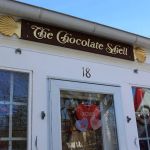 The Chocolate Shell4.0 (79 reviews)
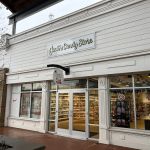 Jack's Candy Store4.0 (14 reviews)
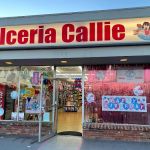 Dulceria Callie4.0 (20 reviews)
 Top Candy Shops for Tourists in New York – Best Sweets and Treats
 Best Candy Shops in New York - A Sweet Adventure Through the City
 How to Make Candy-Themed Crafts for Christmas Gift Giving
 How to Make Chocolate-Covered Strawberries for Kids: A Fun and Easy Recipe
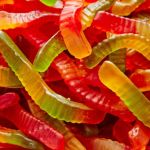 How to Make Easy Gummy Worms at Home | Homemade Candy Recipes
 How to Host a Candy-Themed Movie Night | Fun and Sweet Ideas