
Chocolate Truffle Guide: Shell, Centers, and Temperature
On this page
Quick answer
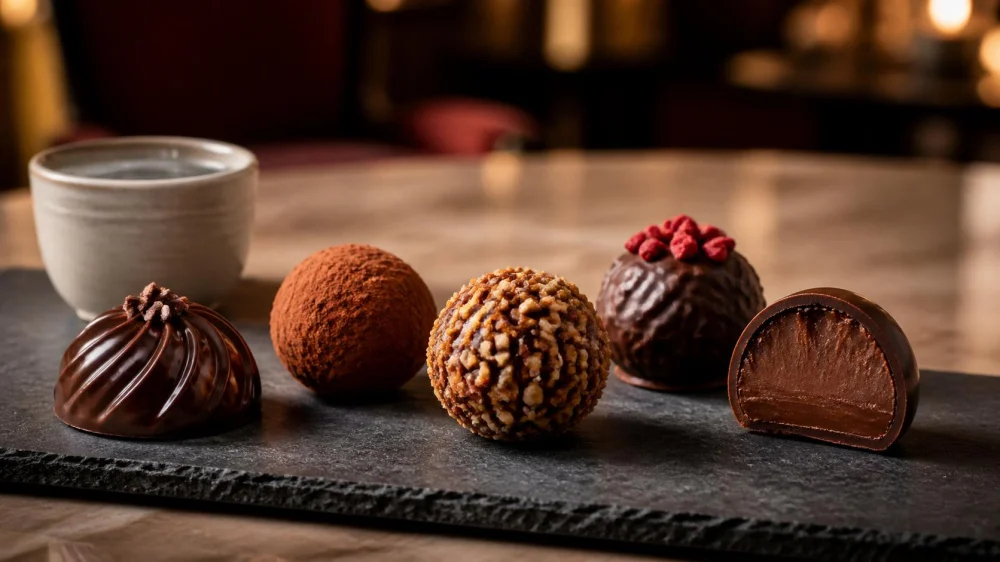
Choose chocolate truffles by shell thickness, center texture, cocoa intensity, flavor, and storage needs. A molded truffle may have a crisp chocolate shell; a hand-rolled truffle may be softer and coated in cocoa, nuts, or crumbs. Let the piece reach the maker’s recommended serving temperature, take a small bite, and use a flavor key so soft centers and allergens are not guessed.
Keep truffles in their original box at the stated temperature. Cream, fruit, alcohol, and other fresh centers can have shorter storage guidance than solid chocolate.
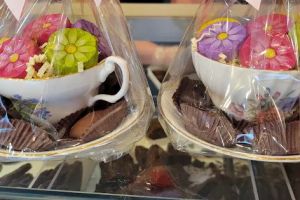
Lee Sims Chocolates / lee sims chocolates
422 Manor Rd, Staten Island, NY 10314, USA
Common truffle styles
- Molded shell: smooth, glossy chocolate with a defined filled center.
- Enrobed: a shaped center covered by a chocolate layer.
- Hand-rolled: soft ganache rolled in cocoa, sugar, nuts, or crumbs.
- Layered: two or more centers such as caramel and ganache.
- Praline-style: nut-based filling that may be smooth or textured.
- Fruit or liqueur center: aromatic, sometimes fluid, with product-specific shelf life.
Shell and coating
A thin shell gives a quick snap and lets the center dominate. A thicker shell adds chew and cocoa intensity. Cocoa powder tastes dry and bitter; chopped nuts add crunch; sugar crystals add sparkle and sweetness; cookie crumbs add texture but soften with moisture.
Bloom—a pale or streaked appearance—can result from fat or sugar changes and may affect texture without automatically meaning spoilage. Damaged packaging, moisture, off odor, leaking centers, or signs of contamination need separate evaluation.

The Ganachery / the ganachery
Lake Buena VistaOrange CountyFlorida
1486 East Buena Vista Drive, Disney Springs, Town Center, Lake Buena Vista, FL 32830, USA
Choose the center
Ganache ranges from dense and buttery to light and melting. Caramel can be flowing or chewy. Fruit centers add acidity; coffee adds roasted bitterness; nut praline adds toast and texture; spice or tea adds aroma; liqueur brings strong flavor and alcohol.
For a mixed box, combine a plain dark ganache, milk or caramel, fruit, and nut or aromatic piece. Use the maker’s key and keep pieces in their assigned positions.
Taste at the right temperature
- Check the box for serving instructions.
- Move only the pieces you plan to eat.
- Let them temper in their closed packaging when recommended to limit condensation.
- Begin with mild milk or vanilla flavors.
- Continue through fruit, caramel, coffee, nut, and intense dark chocolate.
- Use plain water between strongly different pieces.
- Return unused truffles to proper storage promptly.
Do not microwave a truffle. Uneven heating can liquefy the center, damage chocolate, and create a burn risk.
Ingredients and allergens
Truffles commonly contain milk, soy, peanuts, tree nuts, wheat, egg, sesame, alcohol, or other ingredients in shells, centers, coatings, and shared equipment. Decorative color or shape is not a reliable allergen code unless the maker confirms it.
Read the current box label and flavor key. For unpackaged candy, ask staff about ingredients, production, tools, and display cross-contact. Do not rely on removing a coating.
Storage and gifting
Follow the maker’s temperature, refrigeration, humidity, and best-by instructions. Protect truffles from sun, hot vehicles, strong odors, and repeated temperature cycling. If refrigeration is required, keep the box closed while it warms to reduce surface condensation.
A gift should retain the complete label, flavor map, date, and storage directions. Confirm the recipient’s allergy and alcohol preferences before choosing a mixed assortment.
Frequently asked questions
Why did the shell turn pale?
Temperature or moisture changes can cause bloom, but inspect packaging and follow maker guidance.
Should truffles be refrigerated?
It depends on the center and recipe. Use the product’s instructions.
Can children eat liqueur truffles?
Check the ingredient label and choose an age-appropriate alcohol-free product.
How do I identify pieces in a mixed box?
Use the maker’s flavor key and keep the arrangement intact.
Are dark chocolate truffles dairy-free?
Not necessarily. Centers, coatings, and shared equipment may contain milk.
Sources and evidence notes
This guide applies chocolate tempering, center-texture, condensation, aroma-order, packaging, and food-allergy principles. Shells, fillings, water activity, alcohol, shelf life, and storage requirements vary by confectioner.
Use the current ingredient label, flavor map, and maker’s serving and storage instructions for the actual box.
Conclusion and next steps
Choose the center and cocoa intensity first, then compare shell and coating. Keep the flavor map beside the box, temper only the pieces you will eat, and progress from mild to intense. Store the rest exactly as directed and preserve the label so every soft center is identified by information—not by a risky guess.



 Diane Kron Chocolatier/K Chocolatier Family4.0 (37 reviews)
 Smaily’s candy shop5.0 (2 reviews)
 Philly candystand0.0 (0 reviews)
 Sukita Multiservices LLC2.0 (29 reviews)
 Just Ron Chocolate5.0 (7 reviews)
 ICandy4.0 (385 reviews)
 Top Candy Shops for Tourists in New York – Best Sweets and Treats
 Best Candy Shops in New York - A Sweet Adventure Through the City
 How to Make Candy-Themed Crafts for Christmas Gift Giving
 How to Make Chocolate-Covered Strawberries for Kids: A Fun and Easy Recipe
 How to Make Easy Gummy Worms at Home | Homemade Candy Recipes
 How to Host a Candy-Themed Movie Night | Fun and Sweet Ideas