
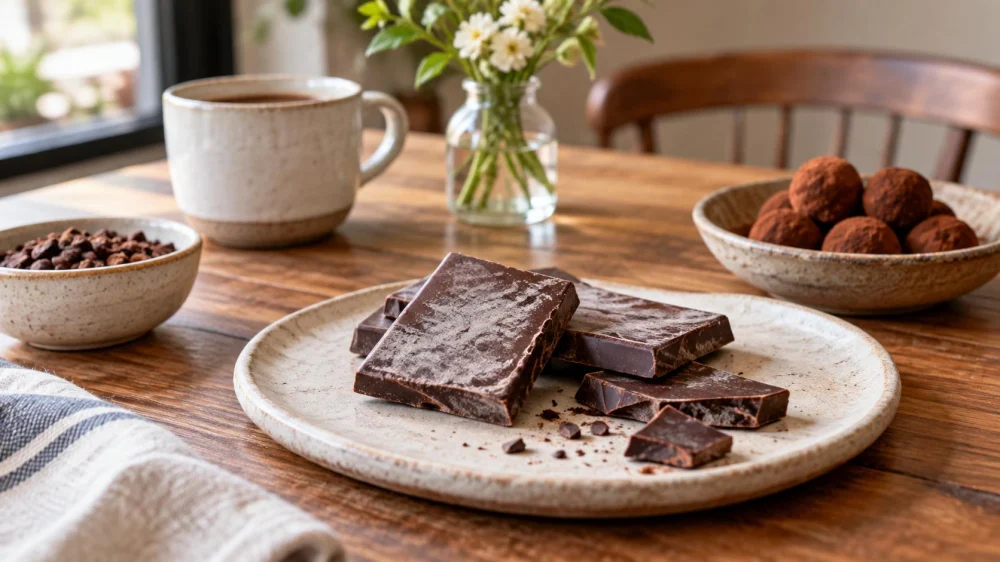
Chocolate Bloom: Appearance, Storage, and Quality Questions
On this page
The short answer
Start by checking appearance, storage, quality questions, and follow-up. Record what you observe, confirm any rule or instruction with the responsible provider, and decide your stop or escalation point before acting. The goal is a repeatable check—not a promise, diagnosis, or substitute for qualified advice.

Chocolate Springs Cafe / chocolate springs lenox massachusetts
LenoxBerkshire CountyMassachusetts
55 Pittsfield Rd, Lenox, MA 01240, USA
Who should use this chocolate bloom guide
This guide is for readers in United States who want a practical way to review chocolate bloom. A useful check separates direct observations, provider statements, and assumptions, then records enough context for a safe next decision.
Confirm ingredients, portions, preparation, and allergen concerns directly with restaurant staff. Keep hot or cold foods within current food-safety guidance and discard items when time or temperature is uncertain.

MarieBelle / mariebelle chocolate
New YorkNew York CountyNew York
484 Broome St, New York, NY 10013, USA
What to gather first
Gather the current instructions, relevant records, contact details, and a simple note format before you begin. Define what success, delay, and a stop condition mean for this situation.
Step-by-step review
- Confirm appearance and write down the source of the information.
- Check storage under the conditions that matter to your situation.
- Record quality questions with a date, location, model, item, or person when relevant.
- Agree how follow-up will be confirmed and what happens if it changes.
Save photos, receipts, or messages only when they are safe, relevant, permitted, and protected appropriately.
When to proceed, pause, or escalate
Proceed when the check is complete and the result fits the stated instructions. Pause when information is missing or conditions have changed. Escalate when safety, legal, medical, structural, financial, or contractual risk is outside your competence.
Important boundaries
Food choices and allergen controls vary by kitchen. Staff information can change, and no guide can guarantee the absence of cross-contact.
Local rules, provider policies, product specifications, prices, and availability can change. Verify the current version before relying on them.
How to check the evidence
Use current public-health food-safety guidance and restaurant information as primary evidence. Check publication dates and applicability to United States; do not rely on an uncited social post, old price, or generic claim for a material decision.
Common questions
How much detail should I record?
Record enough to identify the item, time, condition, instruction, and result. A short, consistent entry is more useful than an unsupported conclusion.
What if two sources disagree?
Pause the decision, identify the current authoritative source, and ask the responsible provider or qualified professional to resolve the conflict in writing when appropriate.
Your action plan
Make one concise record covering appearance, storage, quality questions, and follow-up. Confirm the responsible person, the next checkpoint, and the condition that would make you pause or seek qualified help.






 The Pecan House4.0 (367 reviews)
 Runnin 4 Sweets4.0 (193 reviews)
 Florence's Exquisite Chocolates & Candies4.0 (184 reviews)
 Pandora's Chocolate5.0 (46 reviews)
 Pandora's Chocolate5.0 (46 reviews)
 Alene's Chocolates5.0 (40 reviews)
 Top Candy Shops for Tourists in New York – Best Sweets and Treats
 Best Candy Shops in New York - A Sweet Adventure Through the City
 How to Make Candy-Themed Crafts for Christmas Gift Giving
 How to Make Chocolate-Covered Strawberries for Kids: A Fun and Easy Recipe
 How to Make Easy Gummy Worms at Home | Homemade Candy Recipes
 How to Host a Candy-Themed Movie Night | Fun and Sweet Ideas