
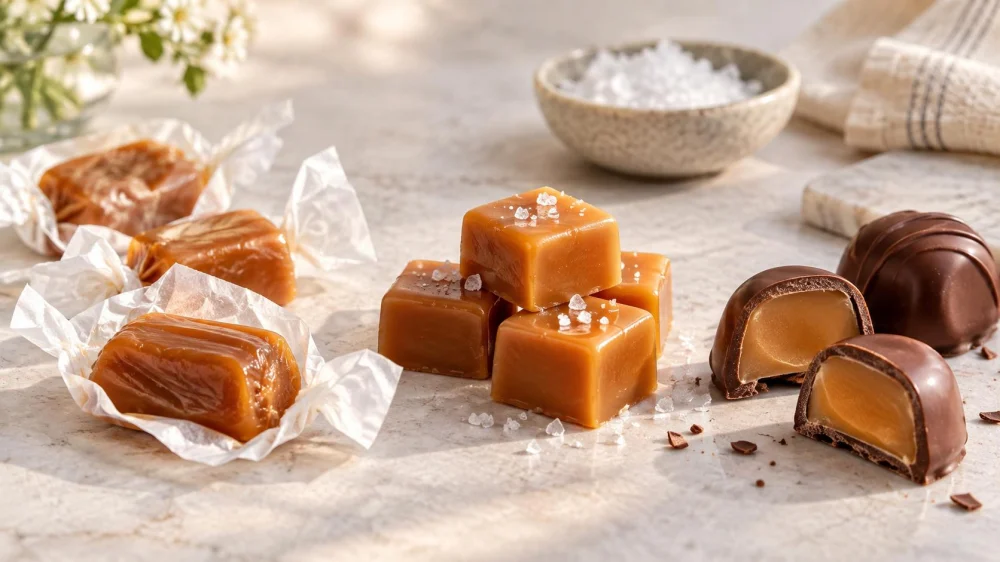
Caramel Candy Guide: Softness, Salt, and Storage
On this page
Quick answer
Choose caramel candy by deciding whether you want a soft pull, a firm chew, or a flowing center. Compare dairy, flavorings, salt level, nuts, chocolate, and other fillings on the label. Keep pieces wrapped and dry, protect them from heat, and let very firm caramel warm slightly before eating rather than biting forcefully.

Chocolate Springs Cafe / chocolate springs lenox massachusetts
LenoxBerkshire CountyMassachusetts
55 Pittsfield Rd, Lenox, MA 01240, USA
Compare caramel styles
Caramel candy is made by heating sugars with ingredients that may include dairy fats, syrups, flavorings, and salt. Recipes and cooking temperature create different textures.
- Soft wrapped caramel: flexible and slow-melting, suited to a small bite or gift assortment.
- Firm chewy caramel: holds shape longer and requires more jaw work.
- Caramel center: may be fluid, creamy, or chewy inside chocolate or another shell.
- Caramel coating: adds sweetness and chew around nuts, popcorn, fruit, or other items.
- Salted caramel: uses salt as a contrast; intensity varies widely.
Names are not standardized enough to guarantee texture. Ask the shop whether the piece is soft, firm, or flowing, especially when buying for someone with dental work or chewing difficulty.

MarieBelle / mariebelle chocolate
New YorkNew York CountyNew York
484 Broome St, New York, NY 10013, USA
Choose the texture you want
For a softer experience, look for products described as soft or creamy and serve them near the maker's recommended temperature. Cold caramel often feels firmer; overheated caramel can become sticky, leak, or lose shape.
Firm caramels are best for diners comfortable with a substantial chew. They are not ideal for loose dental work, braces, swallowing difficulty, or anyone advised to avoid sticky foods. Cut only if the product and knife can be handled safely; never hold a hard piece in your hand while forcing a blade through it.
Balance sweetness, salt, and fillings
Vanilla, browned butter, coffee, fruit, spice, chocolate, and smoke can change how sweet a caramel tastes. Salt can sharpen contrast but does not make the product low in sugar or sodium.
For tasting, start with plain caramel, then move to salted, flavored, nut-filled, or chocolate-coated pieces. Use water between samples and keep portions small so textures and flavors remain distinct.
Check labels and packaging
- Read the complete ingredient and allergen information.
- Ask about shared equipment when allergies matter.
- Check the best-by guidance and storage instructions.
- Choose wrappers that are sealed and not oily, torn, or stuck open.
- For gifts, keep the original label and identify any unwrapped assortment.
Milk, butter, cream, nuts, soy, wheat, and other ingredients may be present depending on the recipe. Color or flavor name cannot confirm an allergen profile.
Store and serve caramels well
Follow the maker's directions. Many wrapped caramels do well in a cool, dry place away from sunlight, heat, humidity, and strong odors. Use an airtight container when recommended and separate strongly flavored pieces.
Do not leave candy in a hot vehicle or direct sun. If chilling is advised, protect it from moisture and allow the sealed package to approach serving temperature before opening to reduce condensation.
Important notes
This guide does not provide medical or dietary advice. People with allergies, diabetes, swallowing concerns, or dental restrictions should use individualized guidance. Candy is a choking risk for young children and others who cannot manage the texture safely.
Discard products with damaged packaging, unexpected odor, visible mold, pest exposure, or storage outside the maker's safe conditions.
Frequently asked questions
Why did my caramel become hard?
Cool temperature, recipe, age, or moisture loss can affect firmness. Follow the maker's storage guidance and do not microwave an individual wrapped piece.
Is salted caramel less sweet?
Salt changes perception and balance, but the candy still contains sugar. Check the label for nutrition and ingredients.
Can I freeze caramel candy?
Only if the maker recommends it. Moisture and temperature changes can alter texture and coatings.
How should I serve a mixed caramel box?
Keep labels or a flavor map, separate allergens, and arrange from plain to stronger flavors. Provide water and small portions.
Sources and evidence notes
The guide uses common confectionery principles: temperature and moisture affect texture, fat and flavorings alter perception, sealed packaging protects quality, and labels—not appearance—identify ingredients. Product-specific instructions take priority.
Next steps
Decide on soft, firm, or filled caramel, then read the ingredient and allergen information. Buy an amount that can be stored as directed, keep pieces wrapped, and serve them at a safe, comfortable texture.



 The Pecan House4.0 (367 reviews)
 Runnin 4 Sweets4.0 (193 reviews)
 Florence's Exquisite Chocolates & Candies4.0 (184 reviews)
 Pandora's Chocolate5.0 (46 reviews)
 Pandora's Chocolate5.0 (46 reviews)
 Alene's Chocolates5.0 (40 reviews)
 Top Candy Shops for Tourists in New York – Best Sweets and Treats
 Best Candy Shops in New York - A Sweet Adventure Through the City
 How to Make Candy-Themed Crafts for Christmas Gift Giving
 How to Make Chocolate-Covered Strawberries for Kids: A Fun and Easy Recipe
 How to Make Easy Gummy Worms at Home | Homemade Candy Recipes
 How to Host a Candy-Themed Movie Night | Fun and Sweet Ideas