
Candy Wrapper Disposal: Sort, Check, and Reduce Waste
On this page
Quick answer
Do not place a candy wrapper in curbside recycling based only on a recycling symbol or shiny appearance. Separate boxes, trays, foil, and flexible film, then check the current rules for your local U.S. program. Empty and prepare only accepted items as directed; put unaccepted wrappers in the proper trash or a verified special collection.

Chocolate Springs Cafe / chocolate springs lenox massachusetts
LenoxBerkshire CountyMassachusetts
55 Pittsfield Rd, Lenox, MA 01240, USA
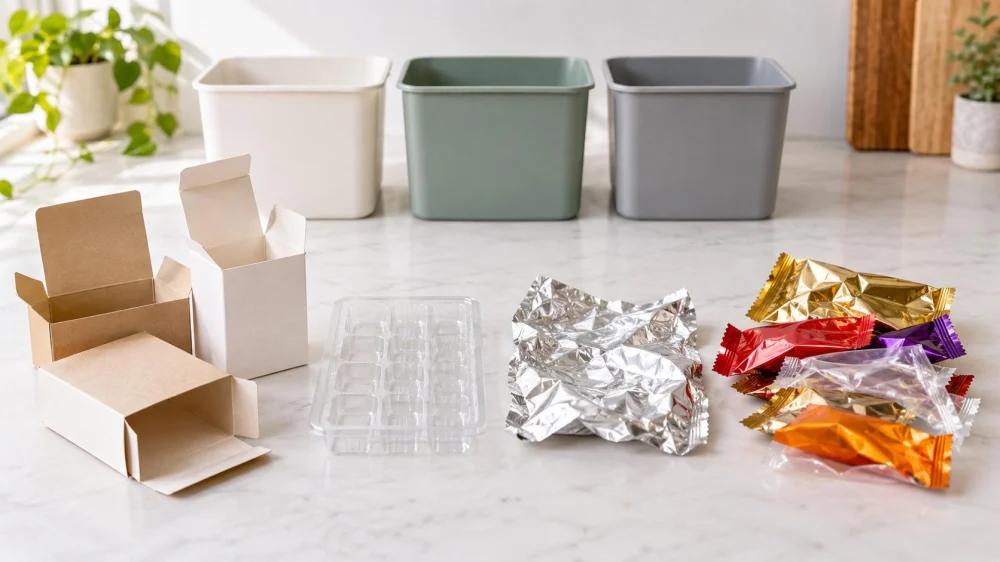
Identify the packaging parts
Candy packaging may combine paperboard, plastic trays, aluminum foil, flexible plastic film, metallized film, paper labels, twist ties, and adhesive. Each component can have a different disposal route.
- Paperboard box: may be accepted if clean, dry, and free of nonpaper inserts.
- Rigid plastic tray: acceptance depends on local resin and shape rules.
- Clean aluminum foil: some programs accept it when consolidated; others do not.
- Flexible or metallized wrapper: often differs from bottles and tubs and may be excluded from curbside collection.
- Composite pouch: bonded layers are difficult to separate and need program-specific instructions.
Do not tear apart a bonded package unless the collector instructs you to. Small fragments can be harder for sorting systems to handle.

MarieBelle / mariebelle chocolate
New YorkNew York CountyNew York
484 Broome St, New York, NY 10013, USA
Check local acceptance
- Use the official website or app for the city, county, hauler, or material-recovery program serving your address.
- Search the exact material and shape, not simply “plastic.”
- Check whether drop-off rules differ from curbside rules.
- Review instructions for lids, labels, foil, food residue, and minimum size.
- When unclear, ask the program before placing the item in recycling.
Recycling rules vary across the United States and can change with equipment and markets. A package claim about technical recyclability does not prove that your local program collects or sorts it.
Prepare accepted materials correctly
Empty packaging and remove food residue using the method the program requests. Keep paperboard dry. Separate loose inserts when directed, flatten boxes only if allowed, and place materials loose in the cart unless the program requires a bag.
Do not send sharp foil balls, sticky candy, or tiny shredded pieces that can contaminate other material or create sorting problems. When cleaning would use excessive water for a very small low-value item, follow local trash guidance.
Evaluate special collection programs
Mail-back, store drop-off, school, and brand-funded programs may accept wrappers excluded from curbside service. Verify the current sponsor, accepted brands and materials, preparation, location, cost, end date, and what happens to collected material.
Do not put candy wrappers in a grocery-store film bin unless that program explicitly lists them. Many candy wrappers are multilayer or metallized and are not the same as clean polyethylene bags.
Reduce wrapper waste before buying
- Choose an appropriate package size instead of many unnecessary individual wraps when hygiene and portion needs allow.
- Prefer products in packaging your local program actually accepts.
- Use reusable serving containers for home events while keeping ingredient and allergen labels available.
- Plan portions to reduce both candy and packaging waste.
- Reuse sturdy gift tins or boxes only when clean, safe, and suitable for the new purpose.
Waste reduction should not remove needed allergen, ingredient, freshness, or tamper information. Keep original labels with shared or gifted candy.
Important notes
This is general U.S. waste-sorting guidance. Your municipal, tribal, campus, workplace, or private-hauler rules control. Never burn wrappers, compost conventional plastic, or leave packaging as litter.
Keep wrappers away from pets and young children. Residual chocolate, xylitol-containing candy, raisins, nuts, and the packaging itself can create hazards. Secure waste and contact a veterinarian or poison resource for suspected ingestion.
Frequently asked questions
Does the recycling triangle mean curbside recycling?
No. A material code or recyclability claim does not confirm local collection. Check the serving program's current list.
Can metallic-looking wrappers go with aluminum?
Not necessarily. Many are plastic films with a thin metallic layer. Use material information and local guidance.
Should I wash every wrapper?
Follow local preparation rules. Remove residue from accepted items, but do not assume an unaccepted wrapper becomes recyclable after washing.
Are paper candy wrappers compostable?
Only if the item and local compost program explicitly accept it. Coatings, inks, adhesives, and plastic layers can make it unsuitable.
Sources and evidence notes
The decision process reflects common waste-management guidance: identify material and format, follow the local collector's accepted list, keep contamination low, and prioritize reduction. Local program instructions are more reliable than appearance or a general packaging claim.
Next steps
Take one empty candy package, separate any loose box or tray, and look up each component in your official local waste guide. Set up a small, clear sorting routine at home and choose future packages that match the collection options actually available.





 The Pecan House4.0 (367 reviews)
 Runnin 4 Sweets4.0 (193 reviews)
 Florence's Exquisite Chocolates & Candies4.0 (184 reviews)
 Pandora's Chocolate5.0 (46 reviews)
 Pandora's Chocolate5.0 (46 reviews)
 Alene's Chocolates5.0 (40 reviews)
 Top Candy Shops for Tourists in New York – Best Sweets and Treats
 Best Candy Shops in New York - A Sweet Adventure Through the City
 How to Make Candy-Themed Crafts for Christmas Gift Giving
 How to Make Chocolate-Covered Strawberries for Kids: A Fun and Easy Recipe
 How to Make Easy Gummy Worms at Home | Homemade Candy Recipes
 How to Host a Candy-Themed Movie Night | Fun and Sweet Ideas