
Candy in a Hot Car: Protect Texture, Packaging, and Safety
On this page
- Understand why cars heat quickly
- Know which candy changes first
- Plan the shopping route
- Pack candy for the drive
- Keep candy secure and shaded
- Check packages after heat exposure
- Cool products gradually
- Protect gifts and event candy
- Manage allergens and labels
- Know when to discard or contact the maker
- Hot-car candy checklist
A parked car can become much hotter than the outdoor air, even when the day feels moderate. Candy left inside may melt, soften, fuse together, lose coatings, leak through wrappers, or develop a pale surface. Some changes affect appearance and texture, while damaged packaging or ingredients with special storage needs may raise a safety concern.
The simplest plan is to keep candy out of an unattended vehicle. Buy it near the end of the trip, bring it indoors promptly, and follow the package directions. Never leave a child, pet, or vulnerable person in a vehicle while protecting a purchase; people and animals always take priority over food.

Anthony-Thomas Candy Shoppe / anthony thomas candy shoppe
ReynoldsburgFranklin CountyOhio
7129 E Main St, Reynoldsburg, OH 43068, USA
Understand why cars heat quickly
Sunlight passes through windows and warms seats, dashboards, packages, and other surfaces. The enclosed air then heats, and a cracked window does not keep the interior at outdoor temperature. Shade can move as the sun changes, so a parking spot that begins cool may not remain cool.
The temperature inside a trunk, glove compartment, delivery box, or dark bag may differ from the cabin, but none should be assumed safe without appropriate control. A short errand can become longer because of a line, appointment, traffic delay, or forgotten task.

Timothy Adams Chocolates / timothy adams chocolates
Palo AltoSanta Clara CountyCalifornia
539 Bryant St, Palo Alto, CA 94301, USA
Know which candy changes first
Chocolate and compound coatings soften readily, especially thin pieces and filled products. Caramels, gummies, marshmallows, taffy, and soft candies may become sticky, lose shape, or bond to wrappers. Hard candy can become tacky when heat combines with humidity.
Filled chocolate, dairy-based candy, nut products, homemade sweets, and items sold refrigerated may have additional handling instructions. Read the label and seller guidance. A general rule for shelf-stable candy should not override a product's specific temperature requirement.
Plan the shopping route
Purchase temperature-sensitive candy after other errands and drive directly to the destination. Check whether someone can receive a delivery, particularly for chocolate gifts. When traveling, identify an indoor storage point before buying rather than expecting the car to function as a pantry.
Use curbside pickup or a climate-controlled store when it reduces exposure. If a trip includes several stops, delay the candy purchase. Do not place food in a vehicle overnight, even if the forecast suggests cooler temperatures; conditions and sun exposure can change.
Pack candy for the drive
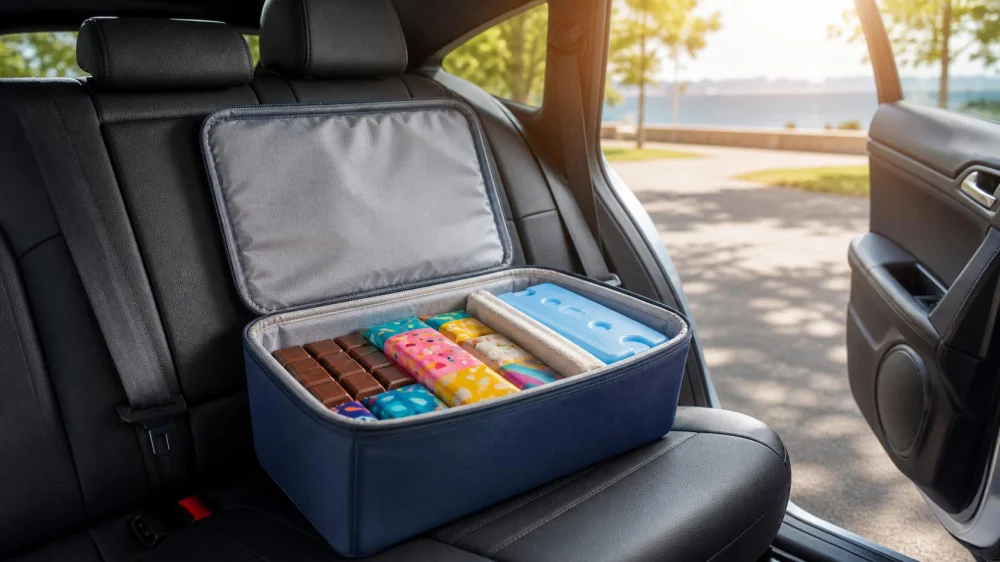
Keep products in their original sealed packages and group them in a clean insulated bag or cooler appropriate to the manufacturer's guidance. Use a barrier between candy and cold packs so condensation and direct freezing do not damage wrappers or texture. Keep melted ice water away from all food packages.
Do not add loose dry ice unless you understand its ventilation, handling, and product requirements. Dry ice can cause cold injury and release carbon dioxide gas; it should never be stored in an airtight container or handled casually inside a vehicle.
Keep candy secure and shaded
Place the insulated bag in the air-conditioned passenger area, out of direct sun, where it cannot slide, tip, or interfere with the driver. The trunk may be hotter and receives less cabin cooling. Never place packages near pedals, loose tools, cleaning supplies, or items that could crush them.
Keep candy away from pets and children during the drive. Chocolate, sugar-free products containing certain sweeteners, raisins, macadamia nuts, and other ingredients can be dangerous to pets. A closed wrapper is not a secure barrier for an unsupervised animal.
Check packages after heat exposure
Before tasting, inspect for broken seals, leaks, swollen packaging, holes, moisture inside a supposedly dry package, unusual odor, contamination, or missing labels. Keep the lot code and best-by date. Photograph shipping or heat damage if you may contact the seller.
Melting alone does not provide enough information to judge every product. Heat can separate fats, distort fillings, and make wrappers adhere. If storage instructions were exceeded or the package is compromised, ask the manufacturer for product-specific guidance or discard the item.
Cool products gradually
Follow the label or maker's directions. For ordinary shelf-stable chocolate that is merely soft and still sealed, a cool, dry indoor place may allow it to firm gradually. Refrigeration can create condensation when the package returns to room temperature and may alter surface appearance or texture.
Do not freeze a mixed candy box automatically. Different centers and coatings respond differently, and sealed packages can trap moisture. Keep damaged pieces separate so melted candy does not obscure individual labels or allergen information.
Protect gifts and event candy
Transport favors, buffet candy, and gift boxes as close to setup time as practical. Confirm that the venue has a cool, secure indoor storage area. Do not place chocolate displays beside windows, stage lights, warming equipment, or outdoor surfaces heated by the sun.
For a gift delivery, alert the recipient and provide tracking. Choose weather-aware shipping when offered, while recognizing that insulation does not make a box safe indefinitely. Include storage guidance and retain the order confirmation in case the package arrives damaged.
Manage allergens and labels
Heat can loosen wrappers and cause products to touch. Once individual identities or ingredient labels are lost, do not guess which candy is safe for someone with an allergy or dietary restriction. Keep each item with its intact original label.
Clean leaked chocolate or sticky candy from the insulated bag before reuse. Wash hands and surfaces, and use suitable cleaning methods to prevent residue from transferring to other foods. Separate allergen-containing products during transport as well as at home.
Know when to discard or contact the maker
Discard candy with an open or punctured package, evidence of pests, contamination by chemicals or dirty water, an unexplained swollen container, mold, or an abnormal odor. Do not taste a questionable item as a safety test. When uncertain, provide the manufacturer with the product, lot, exposure estimate, and observed damage.
If someone becomes ill after eating candy, preserve the wrapper and seek medical advice appropriate to the symptoms. Breathing difficulty, facial or throat swelling, fainting, severe confusion, or rapidly worsening symptoms require emergency help. For a pet exposure, contact a veterinarian or animal poison service promptly.
Hot-car candy checklist
Buy candy last, use a clean insulated carrier when appropriate, keep it in the cooled cabin, avoid direct sun, secure it from pets and children, and bring it indoors promptly. Preserve original wrappers and check product-specific storage directions.
If heat exposure occurs, inspect seals, labels, odor, moisture, and shape before deciding what to do. Contact the maker when the safe response is unclear. Careful route planning costs little and protects the texture, presentation, labeling, and enjoyment of the candy you selected.





 Moon Angel Sweets3.0 (7 reviews)
 Noble Knights Chocolate Co4.0 (89 reviews)
 Rocky Mountain Chocolate Factory4.0 (54 reviews)
 Gefsi0.0 (0 reviews)
 Candy Tyme4.0 (111 reviews)
 Rocket Fizz Mall of America4.0 (36 reviews)
 Top Candy Shops for Tourists in New York – Best Sweets and Treats
 Best Candy Shops in New York - A Sweet Adventure Through the City
 How to Make Candy-Themed Crafts for Christmas Gift Giving
 How to Make Chocolate-Covered Strawberries for Kids: A Fun and Easy Recipe
 How to Make Easy Gummy Worms at Home | Homemade Candy Recipes
 How to Host a Candy-Themed Movie Night | Fun and Sweet Ideas