
Candy Brittle Guide: Snap, Nuts, Portions, and Storage
On this page
Quick answer
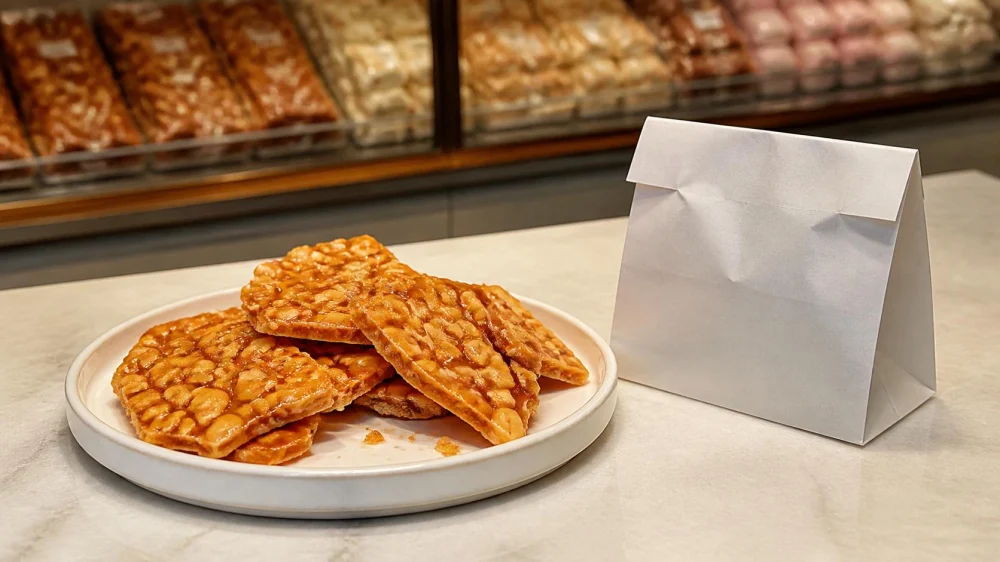
Good brittle should match the style promised by the maker: a clean break, even distribution of nuts or seeds, and no unexpected stickiness or burnt flavour. Check ingredients, allergen controls, piece size, packaging, and production date before buying. Keep it dry, sealed, and away from heat, and break large pieces carefully rather than biting into an awkward slab.

Anthony-Thomas Candy Shoppe / anthony thomas candy shoppe
ReynoldsburgFranklin CountyOhio
7129 E Main St, Reynoldsburg, OH 43068, USA
What controls brittle texture
Brittle is a cooked sugar candy whose texture depends on formula, final cooking conditions, aeration, fat, inclusions, cooling, thickness, and humidity. Nuts and seeds add oil, flavour, and irregular fracture points. Moisture in the air can soften or make the surface sticky, while excess heat can deform pieces or affect coatings and packaging.
This guide is for customers buying packaged or counter-sold candy brittle in the United States. It does not certify food safety, allergen control, dental suitability, or one correct recipe. Ingredients, equipment, thickness, coatings, packaging, and shelf-life instructions vary by candy maker.

Chocolate Museum & Cafe / chocolate museum and cafe
11701 International Dr #400, Orlando, FL 32821, USA
Practical checklist
- Candy base and style: peanut, mixed nut, sesame or other seed, coconut, chocolate-coated, spiced, salted, or shop-specific brittle.
- Nuts, seeds, dairy, soy, egg, gluten-containing ingredients, colourings, flavourings, and shared equipment or counter cross-contact.
- Piece thickness, size range, sharp edges, nut distribution, air bubbles, expected snap, stickiness, and whether pieces suit the recipient.
- Production or packed date if provided, best-quality guidance, package seal, crumbs, condensation, damage, and storage conditions in the shop.
- Weight, price, portion, gift or sharing plan, ingredient label, nutrition information, and whether the package can be resealed.
- Transport temperature, humidity, direct sun, crushing risk, other strong-smelling foods, and time before the candy reaches storage.
- Dental work, chewing difficulty, young children, pets, or other household risks that may make a different candy or smaller portion more suitable.
Step-by-step plan
- Choose the inclusion and flavour first, then confirm the complete ingredient and allergen information before comparing texture or price.
- Ask whether the brittle is thin and delicate, thick and hard, airy, coated, or intentionally chewy at the edges so expectations match the product.
- Inspect the sealed package for damage, condensation, oil leakage, excessive fine crumbs, or an absent label when information matters.
- Select a piece size and quantity that can be handled without biting an oversized slab or scattering sharp fragments around children or pets.
- Carry the package flat and protected from heat, humidity, and crushing. Do not leave it in a hot vehicle or next to wet or aromatic foods.
- At home, open with clean dry hands, transfer only if the maker permits, and keep the original label and date with the candy.
- Serve modest pieces on a stable plate, discard anything contaminated, and reseal promptly according to the maker's storage guidance.
For a repeat purchase, note the maker, brittle style, inclusions, thickness, salt and sweetness, snap, freshness, package size, production or purchase date, price, storage, and how quickly texture changed after opening. Recheck ingredients and cross-contact each time.
Limits and important notes
Colour alone does not prove whether sugar is properly cooked or burnt, and a hard snap does not prove freshness. Brittle can be difficult for teeth and may have sharp pieces. Breaking it smaller does not remove allergen cross-contact, and removing visible nuts does not make a nut brittle safe for a nut allergy.
Tell candy staff about serious allergies before buying and choose another product if ingredient or cross-contact information is uncertain. Do not give brittle to a person who cannot safely manage the hardness and pieces. Seek emergency help for choking, breathing difficulty, throat tightness, faintness, or rapidly spreading swelling or hives.
Frequently asked questions
Why did my brittle become sticky?
Humidity and imperfect sealing can let cooked sugar absorb moisture. Follow the maker's storage guidance and avoid refrigeration unless directed.
Is darker brittle more flavourful?
Colour reflects recipe and cooking, but darker is not automatically better; burnt notes and intended style should be considered.
Can I remove peanuts for someone with an allergy?
No. The candy base and equipment have already contacted peanuts, and cross-contact cannot be removed by picking pieces out.
Should brittle go in the refrigerator?
Usually moisture control is important, but follow the specific maker because coatings and formulas vary.
How should I break a large piece?
Use the maker's guidance, a stable clean surface, dry hands, and controlled pressure away from faces; avoid scattering fragments.
Sources and evidence
Use the candy maker's current ingredient, allergen, production, packaging, shelf-life, and storage information, plus the shop's cross-contact explanation. General confectionery principles explain sugar glass, humidity, and fracture, but the actual formula and process determine the product's intended texture.
Conclusion and next steps
Choose brittle by inclusion, allergen information, intended snap, piece size, and package condition. Protect it from humidity, heat, and crushing, serve manageable pieces, and reseal promptly. If texture, label, or allergy details are uncertain, ask the maker before purchasing rather than judging a sugar candy only by colour or hardness.





 Fannie May4.0 (79 reviews)
 Chandler Fudge5.0 (29 reviews)
 Chocolat Michel Cluizel, Store & Chocolate Tours4.0 (112 reviews)
 Dulces Clara5.0 (36 reviews)
 Li-Lac Chocolates (Hudson Yards)4.0 (78 reviews)
 Chocolate Moonshine co5.0 (4 reviews)
 Top Candy Shops for Tourists in New York – Best Sweets and Treats
 Best Candy Shops in New York - A Sweet Adventure Through the City
 How to Make Candy-Themed Crafts for Christmas Gift Giving
 How to Make Chocolate-Covered Strawberries for Kids: A Fun and Easy Recipe
 How to Make Easy Gummy Worms at Home | Homemade Candy Recipes
 How to Host a Candy-Themed Movie Night | Fun and Sweet Ideas