
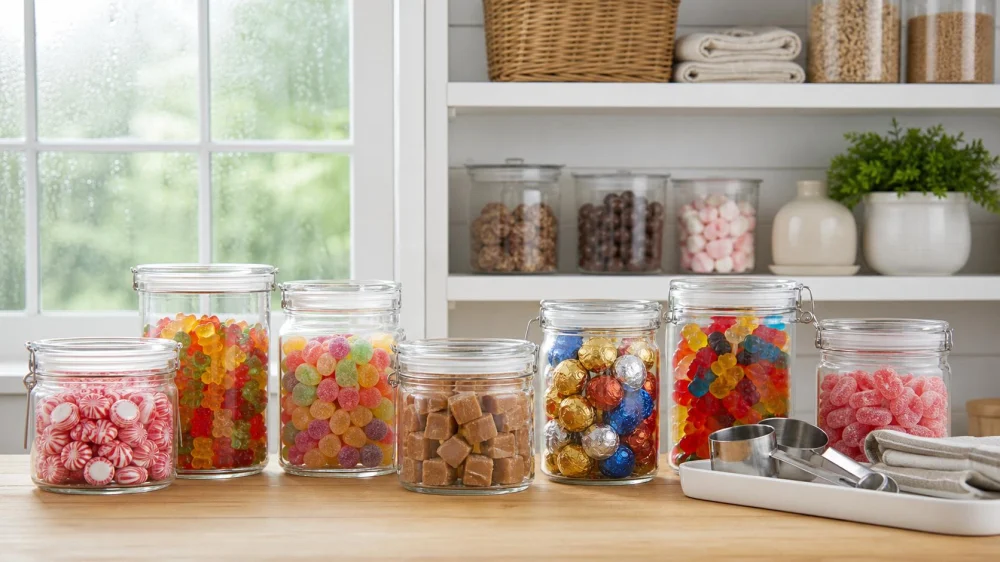
How to Store Candy in Humid Weather Without Ruining Texture
On this page
Quick answer
To protect candy in humid weather, keep each candy type in a clean airtight container, store it in a cool and dry indoor cupboard, minimize how often the container is opened, and follow the package’s temperature instructions. Separate hard candy, gummies, caramels, and chocolate because they react differently to moisture and heat. Refrigerate only when the manufacturer recommends it or indoor conditions make careful cold storage necessary.
Humidity damage in candy occurs when a product gains or loses moisture from surrounding air, changing its surface, structure, flavor, or texture. Sugar attracts water, so exposed candy can become sticky, cloudy, soft, hard, or prone to clumping depending on its ingredients.

Arway Confections / arway confections chicago il
3323 W Newport Ave, Chicago, IL 60618, USA
Why humidity changes candy
Candy texture depends on a controlled balance of sugar, water, fat, gelatin or other gelling ingredients, and sometimes a crisp shell. Leaving a bag open allows that balance to shift. Hard candies often absorb water and become tacky. Gummies may grow sticky or lose their intended chew. Caramels can soften and merge. Chocolate is affected more by heat and temperature swings, though moisture can also damage its surface.
Humidity and heat are separate problems that often arrive together during a United States summer. An airtight container limits moisture exchange, but it cannot protect chocolate left in a hot garage or a sunny vehicle. Good storage manages moisture, temperature, light, odors, and pests at the same time.

The Ganachery / the ganachery
Lake Buena VistaOrange CountyFlorida
1486 East Buena Vista Drive, Disney Springs, Town Center, Lake Buena Vista, FL 32830, USA
Storage rules by candy type
Hard candy and mints
Keep pieces wrapped when possible and place opened packages in an airtight container. Hard candy is best suited to cool, dry cupboard storage. It is not ideal for an open bowl in a humid kitchen because pieces can become sticky and bond together.
Gummies, jelly candy, and marshmallows
Reseal these products immediately after serving. Keep different textures in separate containers; moisture can migrate between products and change both. Avoid adding damp fruit, wet utensils, or homemade ingredients to a commercial bag.
Caramels, taffy, and chewy candy
Retain individual wrappers and protect the pieces from heat. If they begin to soften, move the closed container to a cooler indoor location rather than repeatedly chilling and warming it.
Chocolate and coated candy
Choose a consistently cool, dark place away from appliances and sunlight. Sudden temperature changes can create a dull or streaked surface called bloom. Bloom often affects appearance and texture rather than automatically indicating spoilage, but unusual odor, contamination, or clear package damage still calls for disposal.
Homemade candy
Follow the recipe creator’s tested storage guidance because fillings, dairy, nuts, fresh fruit, and water activity can change safety and shelf life. A rule suitable for plain hard candy may be unsafe for a cream-filled confection.
A practical storage checklist
- Read the original package. Note storage instructions, allergen information, and the best-by date before discarding outer packaging.
- Sort by type. Do not combine candies merely to save space; flavors, fats, and moisture can transfer.
- Use dry equipment. Make sure containers, lids, scoops, and hands are clean and completely dry.
- Close out air. Use a container with a reliable seal and choose a size that does not leave excessive empty space.
- Choose a stable cupboard. Avoid windows, ovens, dishwashers, laundry areas, garages, cars, and other hot or damp locations.
- Label the date. Record when a bulk package was opened and retain product identification for recalls or questions.
- Inspect before serving. Check the package, surface, smell, and texture, especially after a heat wave or power interruption.
How to choose containers and locations
Food-safe glass or rigid plastic containers with intact gaskets are practical choices. Resealable manufacturer bags can also work when the seal remains clean and undamaged. The best container is one that closes reliably, does not retain strong odors, and is easy to wash and dry.
Do not place an unknown loose desiccant directly with food. Some packaged candies include a manufacturer-selected moisture-control packet; leave it in place only as directed and keep it away from children and pets. Never eat the packet contents.
Refrigeration may help some heat-sensitive products, but it can introduce condensation and odor transfer. When cold storage is appropriate, seal the candy before chilling. Before opening, allow the closed container to move gradually toward room temperature so humid air is less likely to condense directly on the candy. Always prioritize the manufacturer’s directions.
When to discard candy
Texture changes alone do not describe every food-safety risk. Discard candy when packaging is torn, leaking, swollen, pest-damaged, or contaminated; when moisture has entered unexpectedly; or when the product has mold, an unusual odor, unexplained discoloration, or a flavor that suggests rancidity. Do not taste an item to test whether visible contamination is safe.
People with food allergies should also avoid mixed bulk containers when ingredient identity or cross-contact cannot be verified. Keep candy away from pets, since chocolate, xylitol-containing products, raisins, and other ingredients may be hazardous to animals.
Sources and evidence notes
The recommendations here reflect general confectionery and food-storage principles: sugar-based products exchange moisture with the air, fat-containing products are sensitive to heat and odors, and repeated temperature changes encourage surface defects and condensation. Exact limits differ by formulation and packaging, so the product label and manufacturer guidance take priority. Food-safety concerns involving homemade fillings or damaged products require more caution than a simple texture problem.
Frequently asked questions
Can rice keep candy dry?
Do not add loose uncooked rice to candy. It can introduce dust, allergens, or contamination and is not a controlled food-storage solution. Use intact packaging and a food-safe airtight container instead.
Why did hard candy become sticky in a sealed jar?
The candy or jar may have contained moisture before sealing, the lid may leak, or the container may have been opened repeatedly in humid air. Clean and fully dry the container, inspect the seal, and start with candy that has not already absorbed significant moisture.
Should all candy go in the refrigerator during summer?
No. Cold storage can create condensation and may damage texture. Use it only when the product instructions recommend refrigeration or when a heat-sensitive item cannot be kept within its advised indoor range.
Can different candies share one airtight container?
It is better to separate them. Gummies, hard candy, chocolate, mints, and caramels can exchange moisture and odors, and allergens may transfer between unwrapped products.
Is white coating on chocolate mold?
A pale or streaked surface can be fat or sugar bloom caused by storage conditions, but appearance alone cannot verify safety. Discard chocolate with mold-like growth, moisture contamination, package damage, or an unusual smell, and contact the manufacturer when uncertain.
Next steps
Move opened candy from humid rooms into separate, dry, airtight containers today. Retain the package directions, record the opening date, and choose a stable indoor cupboard away from heat and light. If texture has already changed, inspect the product carefully and replace it when contamination or spoilage is possible.




 Malley's Chocolates4.0 (265 reviews)
 Chiloso Gummy Bear4.0 (68 reviews)
 Pennvertucky0.0 (0 reviews)
 Yummies Candy & Nuts4.0 (1926 reviews)
 World's Finest Chocolate Inc4.0 (151 reviews)
 Sweet as Fudge Candy Shoppe4.0 (69 reviews)
 Top Candy Shops for Tourists in New York – Best Sweets and Treats
 Best Candy Shops in New York - A Sweet Adventure Through the City
 How to Make Candy-Themed Crafts for Christmas Gift Giving
 How to Make Chocolate-Covered Strawberries for Kids: A Fun and Easy Recipe
 How to Make Easy Gummy Worms at Home | Homemade Candy Recipes
 How to Host a Candy-Themed Movie Night | Fun and Sweet Ideas