
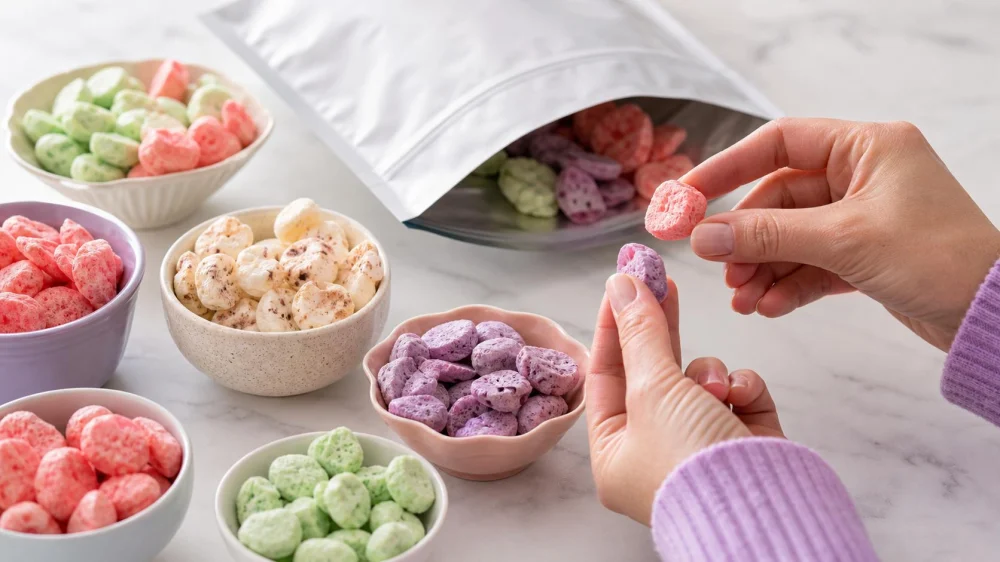
Freeze-Dried Candy Guide: Check Texture, Packaging, and Portion Size
Quick answer: Freeze-dried candy is usually lighter, crispier, and more fragile than the original product, but it is still candy. Read the ingredient and allergen label, check that the package is sealed and dry, expect broken pieces, portion it before snacking, and reseal it quickly because humidity can soften the texture.
1. Freeze-Drying Changes Water and Structure, Not the Basic Identity
The process freezes the candy and removes moisture under low pressure, often expanding or aerating it. Flavor may seem more intense because pieces dissolve differently, but sugar and other ingredients remain. It is not automatically lower-calorie or healthier.
Carousel Candies / chocolate carousel nj
Point Pleasant BeachOcean CountyNew Jersey
500 Boardwalk, Point Pleasant Beach, NJ 08742, USA
2. Read Ingredients, Allergens, and Serving Information
Recipes and processing facilities vary. Check milk, peanuts, tree nuts, wheat, soy, egg, sesame, colors, and other concerns. The original branded-candy name is not enough when a third party has reprocessed it.

3. Look for an Intact Moisture Barrier
A package should be sealed without holes, open seams, moisture droplets, pests, or unexplained residue. Check business information and date or lot markings when provided. Do not buy a puffed, leaking, or damaged pouch.
4. Expect Crisp, Porous, and Sometimes Crumbly Pieces
Shape varies by recipe; some pieces expand dramatically and others change little. Broken pieces are a quality issue when the package is otherwise sound. Wet, sticky, unusually soft, or off-smelling product deserves caution.
5. Pour a Serving Instead of Eating From the Pouch
Light pieces can make a large volume feel insignificant. Use the nutrition label and your needs to portion into a bowl. Close the pouch before eating so open time and hand contact are limited.
6. Match Piece Size and Texture to the Eater
Expanded pieces can still be hard, round, sharp-edged, or difficult to manage. Keep them from young children and anyone with chewing or swallowing difficulty unless an appropriate professional says otherwise. Eat seated and avoid active play.
7. Open the Package Only When Ready
Freeze-dried texture absorbs moisture from air. In humid weather, serve small amounts and close the package promptly. Do not leave a bowl exposed for hours and then pour it back into fresh product.
8. Reseal in a Cool, Dry, Clean Place
Press out excess air only if the package is designed for it and close the zipper fully. If transferring, use a clean, completely dry, food-safe airtight container and keep the original label with it. Avoid heat, sunlight, sinks, and strong odors.
9. Protect Fragile Pieces During Transport
Use a rigid outer box, cushioning, and sealed inner pouch. Include ingredient, allergen, business, and storage information rather than gifting anonymous loose pieces. Keep the package away from heat and humidity.
10. Discard When Moisture, Mold, Pests, or Off Odor Appears
Softening alone may reflect humidity and poor quality, but visible moisture, mold, contamination, package failure, or an unusual odor is a reason not to taste. Contact the seller with photos and lot information when a sealed product seems defective.


 Sweetz & More4.0 (196 reviews)
 Ferrari Chocolate5.0 (12 reviews)
 Mr. Bulky's Foods4.0 (579 reviews)
 Fannie May4.0 (56 reviews)
 Handmade with Love5.0 (42 reviews)
 Rheb's Candies Mt. Airy5.0 (4 reviews)
 Top Candy Shops for Tourists in New York – Best Sweets and Treats
 Best Candy Shops in New York - A Sweet Adventure Through the City
 How to Make Candy-Themed Crafts for Christmas Gift Giving
 How to Make Chocolate-Covered Strawberries for Kids: A Fun and Easy Recipe
 How to Make Easy Gummy Worms at Home | Homemade Candy Recipes
 How to Host a Candy-Themed Movie Night | Fun and Sweet Ideas