
Chocolate-Covered Pretzel Guide: Balance Crunch, Coating, and Salt
On this page
Quick answer
Choose chocolate-covered pretzels by matching the pretzel shape to the eating occasion, then compare coating thickness, chocolate style, salt level, and toppings. Look for a dry crisp pretzel, an even coating that is not sticky, and packaging that protects against breakage and heat. Read the label for wheat, milk, soy, peanuts, tree nuts, and shared-equipment information.
The best balance keeps the pretzel audible and crisp while the coating melts cleanly and leaves room for salt rather than burying every bite under toppings.

Arway Confections / arway confections chicago il
3323 W Newport Ave, Chicago, IL 60618, USA
Choose the pretzel shape
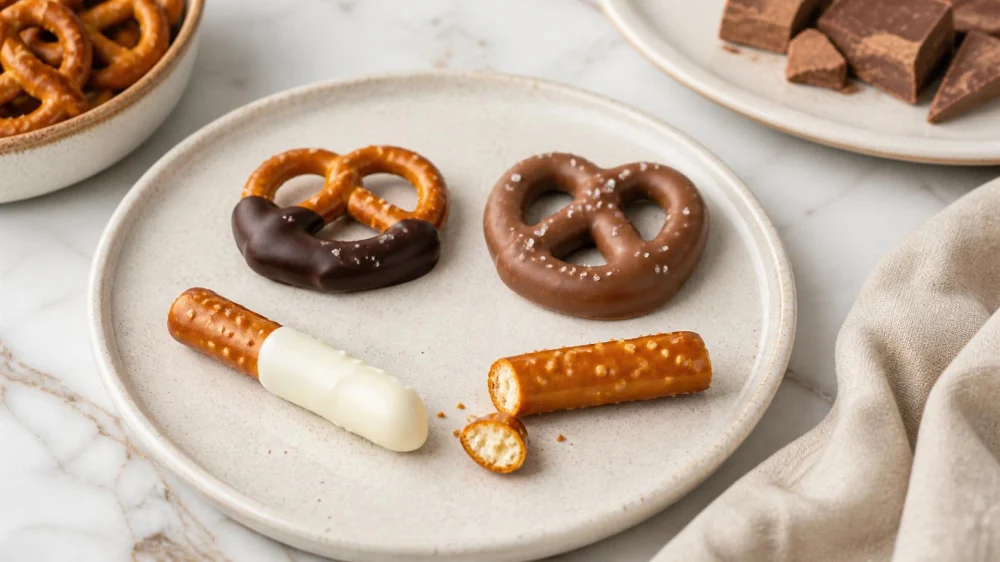
Small twists provide many edges and a high coating-to-pretzel ratio. Rods offer a long crunchy center, room for partial dipping, and easier individual wrapping. Knots and thick twists give more bread-like crunch and a lower coating ratio. Clusters or bites may carry more toppings but are harder to compare piece by piece.
For a tasting, choose one shape across several coatings so the pretzel stays constant. For a gift, individually wrapped rods resist handling but need long protective packaging. For a party bowl, small twists portion easily but create more crumbs and shared contact.

Hatch Family Chocolates / hatch family chocolates
Salt Lake CitySalt Lake CountyUtah
376 8th Ave A, Salt Lake City, UT 84103, USA
Compare the coating
- Choose milk-style coating for a sweeter, creamier profile.
- Choose darker chocolate for more cocoa bitterness against salt.
- Choose white-style coating for a sweet dairy-forward canvas, while confirming how the product is labeled.
- Decide between full coverage and a partial dip; partial coating preserves more direct pretzel crunch.
- Pick one topping category—nuts, candy pieces, cookie crumbs, drizzle, spice, or extra salt—rather than stacking every texture.
- Confirm whether decoration adds an allergen or makes pieces difficult to pack and share.
A thicker coating is not automatically higher quality. It changes the melt, sweetness, snap, and salt balance and can soften the pretzel faster if storage is poor.
Check quality
The pretzel should be crisp rather than leathery or stale, with no damp or cardboard flavor. The coating should release from the package cleanly and match the maker’s intended finish. A pale or streaked surface can be chocolate bloom caused by temperature or fat movement; it affects appearance and sometimes texture, but visual inspection alone cannot determine the full storage history.
Check for melted-and-reset shapes, smeared packaging, condensation, broken seals, crushed pieces, rancid nuts, or off odor. Tiny cracks at pretzel edges can occur during handling, but extensive flaking suggests the package did not protect the coating. Do not taste pieces from damaged or contaminated packaging.
Pack, pair, and store
Keep the original package closed in a cool, dry, odor-free place according to the maker’s directions. Protect from sunlight, hot vehicles, heaters, refrigerators with strong odors, and repeated temperature changes. If chilled storage is recommended, let the sealed package warm gradually before opening to reduce condensation.
Pair a sweet full coating with unsweetened coffee or tea, fruit, or a less-sweet snack. Darker coating can work with roasted nuts or coffee, while a simple milk coating suits a broad gift box. Use small portions: coating and salt make repeated bites easy to underestimate. Pack rigid dividers around rods and layers of twists so toppings do not rub off.
Buying checklist
- Twist, rod, knot, bite, or cluster chosen
- Full versus partial coating decided
- Chocolate style and sweetness matched
- Salt and topping level compared
- Wheat, milk, soy, nut, and cross-contact labels read
- Crispness, coating finish, seal, and breakage checked
- Heat and transit protection planned
- Original storage and date information retained
Limitations
Chocolate terminology, coating composition, recipes, and allergen controls vary. Appearance cannot verify ingredients or safety. People with food allergies or medical dietary needs should use current manufacturer information and contact the maker when label details are insufficient.
FAQ
Are rods better than twists?
Rods are easier to wrap and hold; twists offer more edges and coating. Choose for the occasion and preferred ratio.
Does white film mean spoilage?
It may be bloom, but the full package condition, odor, date, and storage history matter. Do not eat candy with damaged packaging or contamination.
Why did the pretzel become soft?
Humidity, coating moisture, age, or poor sealing may have reduced crispness.
Should I refrigerate chocolate pretzels?
Follow the maker. Refrigeration can introduce odors and condensation and change texture.
Can I assume plain pretzels are nut-free?
No. Toppings, chocolate, and shared equipment can add cross-contact risk; read the current label.
Evidence notes
The product label, manufacturer allergen statement, package seal, date and lot, storage directions, and known temperature history are the strongest evidence for a purchase. Crunch, melt, salt, and coating ratio are comparative sensory criteria, not claims that one product is universally best.
Conclusion
A satisfying chocolate pretzel keeps all three elements legible: crisp baked structure, clean-melting coating, and enough salt for contrast. Choose the shape and coating ratio first, limit toppings, inspect the package, and protect it from heat and humidity.



 Candy Craze4.0 (81 reviews)
 Superior Nut & Candy Company3.0 (56 reviews)
 Amy's Chocolates3.0 (11 reviews)
 See's Candies Volume Savings4.0 (200 reviews)
 Up Treat Creek LLC5.0 (20 reviews)
 Dulceria Monarka4.0 (126 reviews)
 Top Candy Shops for Tourists in New York – Best Sweets and Treats
 Best Candy Shops in New York - A Sweet Adventure Through the City
 How to Make Candy-Themed Crafts for Christmas Gift Giving
 How to Make Chocolate-Covered Strawberries for Kids: A Fun and Easy Recipe
 How to Make Easy Gummy Worms at Home | Homemade Candy Recipes
 How to Host a Candy-Themed Movie Night | Fun and Sweet Ideas