
Chocolate Bar Snap: What the Break Can Tell You
On this page
Quick answer
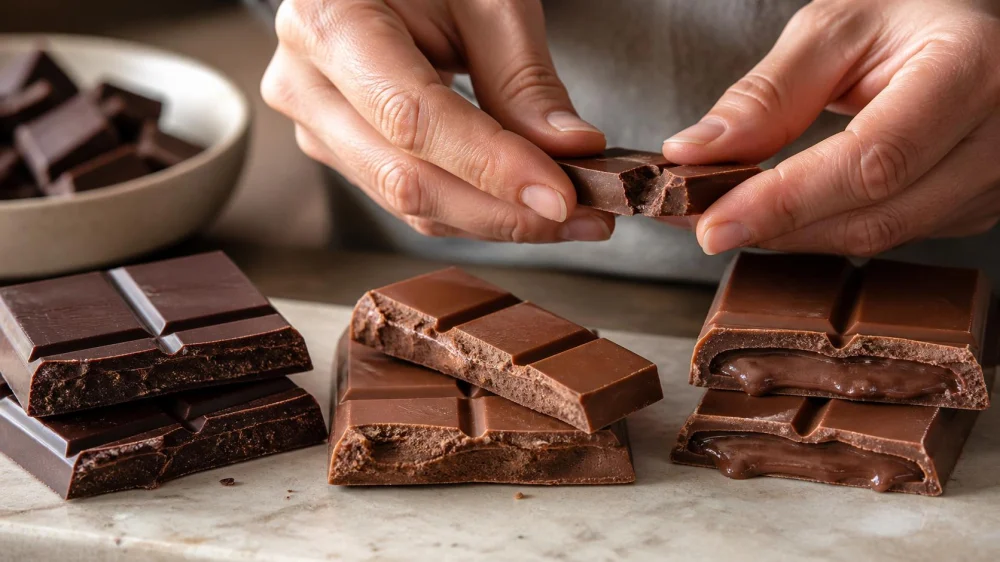
A chocolate bar’s snap is the sound and feel when it breaks. A firm, clean break can reflect a well-set cocoa-butter structure, suitable temperature, bar thickness, and a plain formulation. A softer bend or quiet break may be intentional in milk, white, filled, nut, or inclusion-heavy bars. Snap alone cannot prove quality, cocoa percentage, freshness, authenticity, or food safety.
This guide is for candy shoppers and home tasters in the United States comparing chocolate bars. Recipes, cocoa-butter content, milk fat, fillings, inclusions, tempering methods, storage, and room temperature vary. Judge a product against its intended style, not one universal snap.

The Ganachery / the ganachery
Lake Buena VistaOrange CountyFlorida
1486 East Buena Vista Drive, Disney Springs, Town Center, Lake Buena Vista, FL 32830, USA
What chocolate “snap” means
Snap is a sensory description with three parts:
- sound: a sharp crack, gentle click, muted break, or almost silent bend;
- feel: the force needed before the bar separates; and
- fracture: the shape and texture of the broken edge.
In a plain solid bar, cocoa butter crystal structure helps determine gloss, firmness, melting behavior, and fracture. Chocolate makers manage that structure through controlled heating, cooling, agitation, and setting, commonly discussed as tempering.
But the finished bar is more than cocoa butter. Sugar, cocoa solids, milk ingredients, other permitted fats, emulsifiers, flavorings, nuts, cookies, fruit, caramel, cream, and air pockets all affect how stress moves through it.
Temperature matters immediately. The same bar may crack sharply when cool, break gently at a comfortable tasting temperature, and bend or smear when warm. A snap comparison is meaningful only when the pieces have similar shape and temperature.

Lee Sims Chocolates / lee sims chocolates
422 Manor Rd, Staten Island, NY 10314, USA
Six factors that change the break
1. Chocolate type and formula
Dark, milk, and white chocolate use different proportions of cocoa ingredients, sugar, and milk components. Milk fat can soften texture. Alternative formulations and compound coatings may behave differently from chocolate made with cocoa butter.
2. Bar thickness and scoring
A thick block requires more force than a thin tablet. Deep segment grooves direct the break; shallow or decorative molds may create an irregular edge. Compare pieces of similar width and thickness.
3. Fillings and inclusions
Caramel, ganache, wafer, nougat, nuts, fruit, crisped grains, and cookie pieces interrupt the solid chocolate layer. The shell may snap while the center stretches, crumbles, or flows. That contrast can be the intended design.
4. Temperature
Cool chocolate is firmer; warm chocolate softens. Holding a piece in the fingers before breaking can warm one side enough to change the result. Compare pieces after equal time in the same room.
5. Temper and setting
A stable, well-set cocoa-butter structure often supports a clean break in a plain bar. Poor temperature control during production or later melting and resolidifying can change gloss and texture. Appearance and snap together provide clues, not a laboratory determination.
6. Storage history
Heat cycles, humidity, odor exposure, crushing, and long storage can affect surface, flavor, and structure. A bar can also break in shipping while remaining otherwise acceptable. Check packaging and condition rather than using fracture alone.
A practical comparison checklist
- Read the product description. Identify dark, milk, white, filled, layered, inclusion-heavy, or compound-style product before setting an expectation.
- Check the package. Look for damage, open seals, moisture, pests, unusual swelling, or contamination. Do not taste a compromised product.
- Use a stable room. Let wrapped bars reach the same moderate room conditions without direct sun, a hot car, or refrigeration condensation.
- Compare similar segments. Break pieces with comparable thickness and scoring. Use clean dry hands or utensils.
- Listen once. Note sharp, gentle, muted, or no snap without repeatedly bending and warming the piece.
- Look at the edge. Record clean, crumbly, layered, aerated, nut-interrupted, or filled fracture.
- Observe the surface. Note gloss, scuffs, streaks, bloom, melting, and fingerprints separately from snap.
- Taste after the break. Assess melt, graininess, smoothness, flavor release, sweetness, bitterness, milkiness, and aftertaste.
- Use neutral notes. Write “quiet bend, soft center” rather than “bad temper” unless evidence supports that conclusion.
For a blind tasting, code the samples, standardize piece size, check allergens before serving, and provide water and a neutral palate break. Do not hide ingredient or allergen information from participants in the name of blind testing.
What snap cannot prove
Quality: a sharp crack may suit a plain tablet, while a soft break may suit a filled or high-milk bar. Quality includes ingredient balance, flavor, texture, workmanship, and intended style.
Cocoa percentage: percentage labels depend on the manufacturer’s formula and labeling rules. You cannot calculate cocoa content from sound.
Freshness: storage damage may affect snap, but a strong snap does not confirm a current best-by date, proper handling, or flavor freshness.
Tempering diagnosis: snap, gloss, release from a mold, melting behavior, and bloom can suggest crystal behavior, but home observation cannot identify every production variable.
Authenticity: premium claims, origin, bean variety, ethical sourcing, organic status, and manufacturer identity require labels and traceable documentation.
Food safety: a bar can sound perfect and still be unsafe because of an open package, allergen, contamination, recall, or poor storage. Safety screening comes before sensory testing.
Store and serve for a fair comparison
Keep chocolate in a cool, dry, odor-free place in its original or well-sealed food-safe packaging. Avoid direct sunlight, hot cars, heaters, damp cabinets, and repeated temperature swings.
Refrigeration may be useful in a very hot environment but can introduce condensation and odors. If refrigerated chocolate is brought out, keep it wrapped while it gradually warms so moisture is less likely to collect directly on the surface. Follow the manufacturer’s storage instructions.
Do not heat a bar just to improve snap. Heating changes structure and can create burns or fire risks if done carelessly. For normal tasting, compare the chocolate at a comfortable stable room temperature.
Filled chocolate may have shorter or different storage instructions from a solid bar. Cream, fruit, alcohol, nut, and soft centers can change handling needs. Use package guidance and discard a product with spoilage signs or uncertain storage.
Food safety and ingredient notes
This article uses common chocolate-making and sensory principles: cocoa-butter structure, formula, dimensions, inclusions, temperature, and storage influence fracture. It does not test composition, crystal form, microbial safety, allergens, or shelf life.
For food allergies, read the current package every time and check shared-equipment or facility statements. Unwrapped candy from a display may have lost its ingredient information or experienced cross-contact. Ask the seller and choose a sealed, clearly labeled option when risk matters.
Check official recall information and contact the manufacturer for a product-specific concern. Do not taste candy with an open seal, foreign material, pest evidence, chemical odor, unexpected moisture, or other contamination sign.
Frequently asked questions
Does dark chocolate always have a louder snap?
No. Formula, thickness, temperature, temper, and inclusions matter. A plain dark tablet may often feel firmer than a milk bar of similar size, but “always” is too broad.
Why did my chocolate bar bend instead of break?
It may be warm, thin, high in softer ingredients, filled, or affected by storage or setting. Let a wrapped piece reach stable room conditions and compare it with the intended style.
Does no snap mean the chocolate is stale?
Not necessarily. Filled and soft-formula bars may be designed to bend. Check the date, packaging, odor, surface, ingredient style, and storage history.
Can chocolate bloom change the snap?
Bloom and the conditions that caused it may coincide with texture changes, but the relationship varies. Bloom can come from fat or sugar behavior and needs more context than sound alone.
Should white chocolate snap?
A solid, well-set white chocolate bar can break cleanly, but milk ingredients, formula, thickness, temperature, and inclusions affect firmness. Compare it with its own intended style.
Is a clean break a sign of expensive chocolate?
No. Price includes brand, ingredients, sourcing, packaging, production, and market positioning. A clean break is one sensory trait, not a value certificate.
Next steps
Identify the chocolate style, check packaging and allergens, bring samples to the same stable temperature, and compare similar segments. Record sound, force, broken edge, surface, melt, and flavor separately. Use snap as one clue about texture and setting, and avoid turning it into a claim about quality, cocoa percentage, freshness, authenticity, or safety that it cannot support.


 Mr. Kite's The Chocolate Shop4.0 (216 reviews)
 Dolce Patisserie5.0 (160 reviews)
 Sweet Jerks Emporium4.0 (46 reviews)
 EBENEZER DULCES Y REGALOS0.0 (0 reviews)
 The Chocolate Bar4.0 (135 reviews)
 Candy Cloud and Chai Lounge4.0 (3 reviews)
 Top Candy Shops for Tourists in New York – Best Sweets and Treats
 Best Candy Shops in New York - A Sweet Adventure Through the City
 How to Make Candy-Themed Crafts for Christmas Gift Giving
 How to Make Chocolate-Covered Strawberries for Kids: A Fun and Easy Recipe
 How to Make Easy Gummy Worms at Home | Homemade Candy Recipes
 How to Host a Candy-Themed Movie Night | Fun and Sweet Ideas