
Sugar-Free Candy: Check Sweeteners, Portions, and Pet Safety
On this page
Quick answer
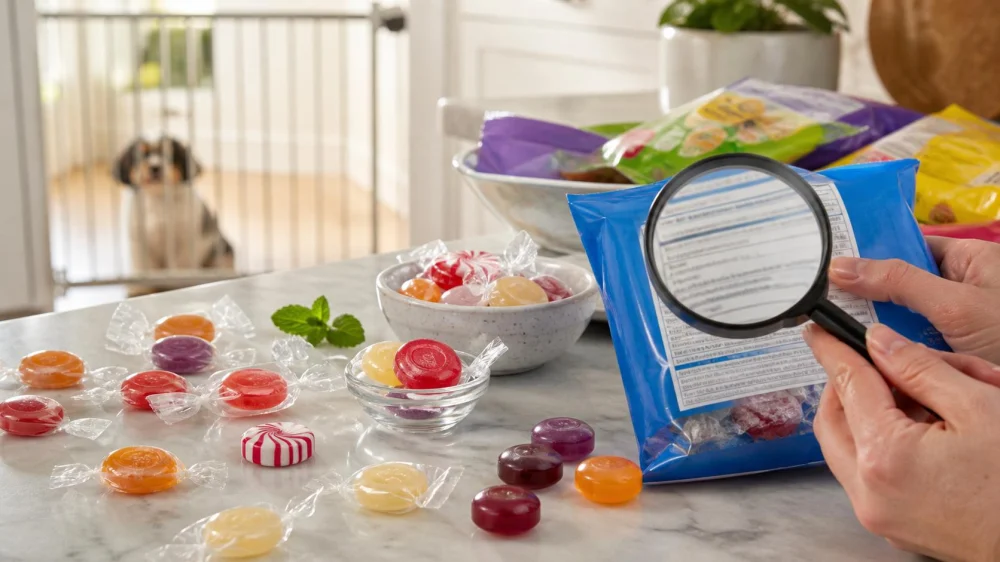
Read the full ingredient and nutrition label every time; sugar-free does not mean free of carbohydrates, calories, allergens, or side effects. Some sugar alcohols can cause digestive symptoms in larger portions, and xylitol is highly dangerous to dogs. Start with a small serving, keep wrappers and the original package, store all candy securely away from pets and children, and seek immediate veterinary help for possible dog exposure.

Goofy's Candy Company / goofy's candy co
1375 E Buena Vista Dr, Orlando, FL 32821, USA
Why it matters
Sugar-free candies use different sweeteners, fibers, coatings, and fillings. Their sweetness, texture, dental effects, blood-glucose impact, digestive tolerance, and pet toxicity are not interchangeable.
This United States guide is general food information, not medical advice. Product formulas, serving sizes, diabetes plans, digestive conditions, allergies, age, and medications vary. Follow clinician, dietitian, dentist, and poison-control guidance.

Sugar Planet / sugar planet ocean city md
Ocean CityWorcester CountyMaryland
407 Atlantic Ave, Ocean City, MD 21842, USA
Practical checklist
- Read ingredients, serving size, total carbohydrate, sugar alcohol, allergen, and warning statements.
- Identify the specific sweeteners rather than relying on the front label.
- Start with a small portion and avoid mixing several unfamiliar products.
- Keep the package so symptoms can be matched to the formulation.
- Store candy in a closed high cabinet or locked container away from pets.
- Do not carry loose pieces where they can be mistaken for regular candy or medicine.
- Recheck the label on every purchase because recipes can change.
Step-by-step plan
- Choose a product by ingredient fit and portion, not only the words sugar-free.
- Compare texture and sweetener type, especially for gummies, hard candy, chocolate, and mints.
- Plan a modest serving and note other sugar-alcohol foods eaten the same day.
- For diabetes or other medical needs, count the product according to the person's care plan rather than assuming no effect.
- Dispose of wrappers and dropped pieces immediately and inspect bags, cars, and floors around dogs.
- Stop eating for significant digestive or allergy symptoms and preserve the package.
- For suspected pet ingestion, call a veterinarian or animal poison service immediately without waiting for symptoms.
Keep brand, flavor, lot, ingredients, serving, time, other foods, symptoms, medical guidance, and any pet access or poison-case number.
Limits and warning signs
Sugar-free is a labeling claim, not a promise of unrestricted portions or dental neutrality. A product without added sugar may still contain starches or naturally occurring sugars. Human tolerance cannot predict pet safety.
Call emergency services for severe allergic reaction. Seek clinician advice for significant symptoms or glucose concerns. Treat any possible dog exposure to xylitol as a veterinary emergency and do not induce vomiting unless directed.
Frequently asked questions
Does sugar-free candy raise blood sugar?
It can, depending on carbohydrates, sweeteners, portion, and the person. Use the nutrition label and care plan.
Why does it upset my stomach?
Some sugar alcohols and fibers can cause gas, cramps, or diarrhea, especially in larger amounts.
Is sugar-free candy safe for dogs?
Never assume so. Xylitol can be life-threatening; keep all candy away and call immediately for exposure.
Can I trust the same flavor every time?
Recheck the package because ingredients and facilities may change.
Sources and evidence
The guide reflects food-label, digestive-tolerance, diabetes-planning, allergy, and veterinary poison-safety principles: identify the sweetener, control portions, preserve packaging, secure products from pets, and act immediately for suspected xylitol exposure.
Conclusion and next steps
Read the entire label, choose a small portion, and keep the package. Store the candy where no pet or child can reach it, and call veterinary help immediately if a dog may have eaten any unknown sugar-free product.





 The Candy Lady/DMV4.0 (124 reviews)
 Mexicandy5.0 (19 reviews)
 Manzanitas Las Originales4.0 (12 reviews)
 Dulceria Las Chicanas LLC5.0 (1 reviews)
 Chocolates On Broadway4.0 (76 reviews)
 Rainbow Dulceria4.0 (7 reviews)
 Top Candy Shops for Tourists in New York – Best Sweets and Treats
 Best Candy Shops in New York - A Sweet Adventure Through the City
 How to Make Candy-Themed Crafts for Christmas Gift Giving
 How to Make Chocolate-Covered Strawberries for Kids: A Fun and Easy Recipe
 How to Make Easy Gummy Worms at Home | Homemade Candy Recipes
 How to Host a Candy-Themed Movie Night | Fun and Sweet Ideas